
Brisbane Flooding Guide for Home Buyers | MC Mortgage Solutions
Buying a home in Brisbane is a dream for many. However, it comes with its own set of challenges. Chief among them is the risk of flooding. Flooding in Brisbane today continues to affect the city’s property market.
Understanding flood risks is crucial for potential buyers. From past major flood events, like the 2011 disaster, to flash flooding in Brisbane, the threat of flood damage is always a concern.
In this guide, we’ll break down everything you need to know about flood maps, Brisbane flooding, safe suburbs, lender policies, and how these factors affect home loan approvals and insurance.
1. Understanding Brisbane’s Flood Risk
Brisbane, with its proximity to the Brisbane River and its low-lying suburbs, is vulnerable to flooding. The city has faced severe floods in the past. The notorious 2011 flood is a significant event in its history.
However, flooding in Brisbane today remains a regular concern. Especially during the summer months, heavy rains cause flash flooding. Areas close to rivers, such as the Manly Bayside area, experience frequent flash flooding in Brisbane. Many Brisbane suburbs are susceptible to varying flood risks.
To mitigate the impact on homebuyers, Brisbane City Council provides detailed flood maps. These maps show areas at different levels of flood risk. Using these flood maps, Brisbane buyers can assess flood risks in specific suburbs.
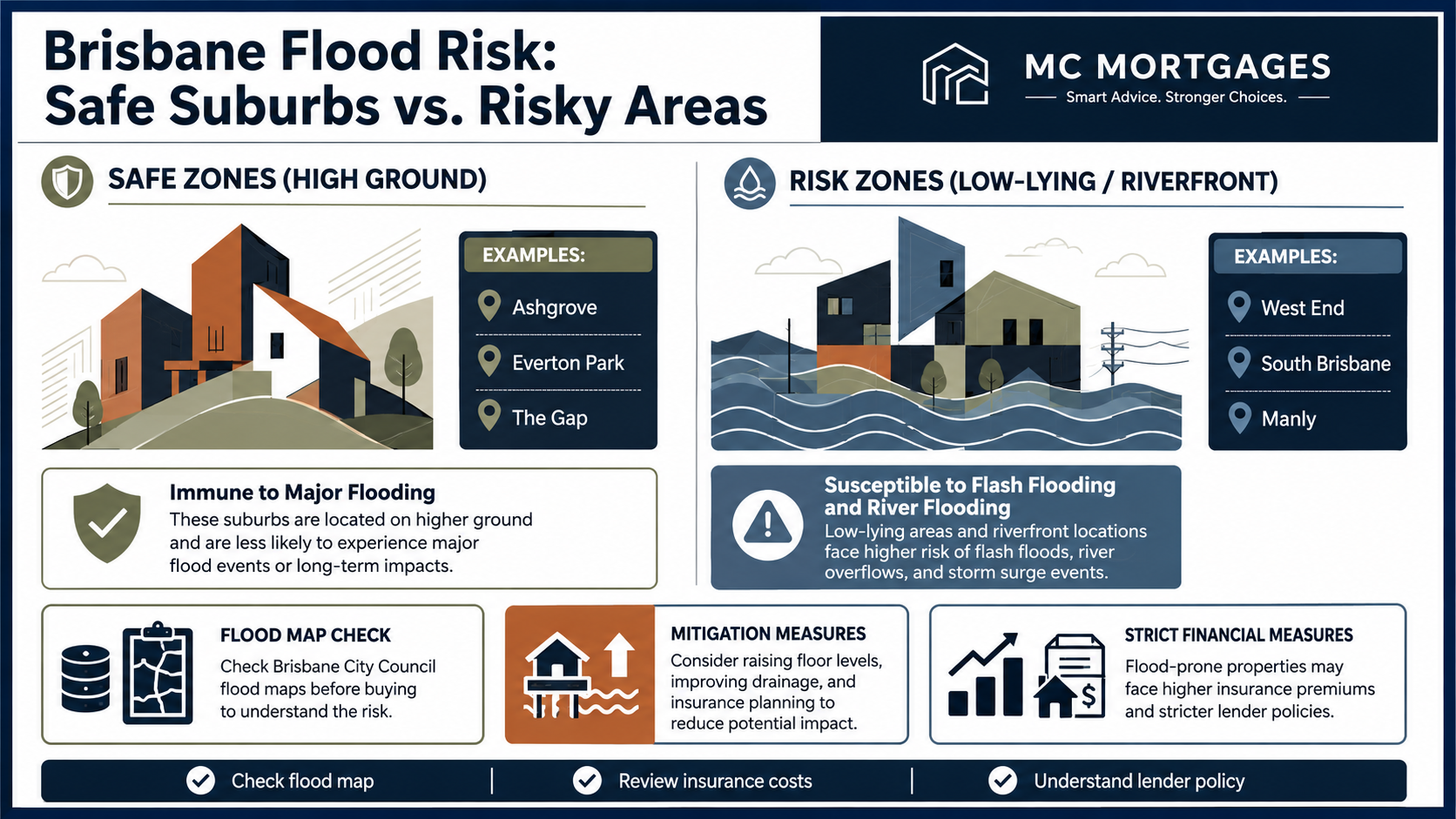
For example, suburbs near the river, such as West End and South Brisbane, are at high risk of flooding. Suburbs like Ashgrove and The Gap are situated on higher ground and are much less vulnerable.
If you’re considering buying a property, understanding the flood risk assessment for different Brisbane suburbs is essential.
2. How Flooding Impacts Home Loan Approvals and Insurance
The risk of flooding in Brisbane plays a pivotal role in securing home loans and property insurance. Lenders, such as ANZ, NAB, and Westpac, consider flood risk when evaluating a mortgage application. Homes in flood-prone areas may face higher scrutiny from lenders, and in some cases, buyers may struggle to get a loan approval.
For properties in flood zones, insurance becomes a critical factor. Flooding in Brisbane increases the likelihood of needing flood insurance, but in high-risk areas, insurers may refuse coverage or charge significantly higher premiums. Furthermore, some insurance policies may require flood mitigation measures before coverage can be extended.
The policies that lenders and insurance companies follow depend largely on Brisbane’s flood risk assessment. Areas with a high chance of flooding are typically deemed higher risk, leading to expensive premiums and more stringent loan requirements.
Many homebuyers in Brisbane flood zones may also need to take additional steps to secure financing. This includes obtaining a flood risk report or even completing flood risk mitigation
3. Decoding Brisbane City Council Flood Maps
One of the best resources for flood risk assessment in Brisbane is the Brisbane City Council flood maps. These maps provide clear, up-to-date flood data that helps homebuyers understand flood risks in specific areas. The flood maps indicate the flood levels in each zone, categorized from low to high risk. T
The Brisbane City Council maps are interactive, allowing users to check flood risks for particular properties. By entering an address, potential homebuyers can assess whether a property falls within a flood zone.
These interactive tools make it easier to assess flood risks, offering real-time updates and flood level data. This is especially useful for properties in flood-prone areas, as it helps buyers make an informed decision about purchasing a home in such zones.
4. Safe Suburbs vs. Risky Areas: The Best Places to Buy Property in Brisbane
When it comes to buying property in Brisbane, understanding the flood risk of different suburbs is essential. Some areas of Brisbane are highly susceptible to flooding, while others are much safer and safer suburbs. Brisbane should be a priority for buyers concerned about flooding.
Safe Suburbs:
- Ashgrove: This suburb is positioned on higher ground, making it largely immune to flooding.
- Everton Park: Located in the northern part of Brisbane, this suburb is less prone to flooding and is a great choice for homebuyers.
- The Gap: Another suburb that sits at a higher elevation, offering minimal flood risk and a great environment for families.
Risky Suburbs:
- Manly & Bayside Areas: Known for their proximity to the Brisbane River, these suburbs experience frequent flash flooding in Brisbane due to their low-lying nature.
- West End: While popular and vibrant, parts of West End are prone to flooding, especially areas close to the river.
The key takeaway when buying property in Brisbane is to assess flood risks using the Brisbane City Council flood maps and interactive tools. Avoid purchasing property in low-lying or riverfront suburbs, especially in flood-prone areas like Manly. Look for suburbs with higher elevations, such as Ashgrove and The Gap, to reduce flood risk.
5. Lender Policies on Flood-Prone Properties
Brisbane lenders are increasingly cautious about properties in flood-prone areas. Flooding in Brisbane today and past flood events influence the way lenders assess home loans for such properties. For instance, banks like ANZ and Commonwealth Bank may require a higher deposit for properties in high-risk flood zones or may refuse financing altogether.
Lenders rely on flood maps Brisbane and flood risk assessments to determine whether a property is eligible for a loan. High-risk properties may face higher interest rates or stricter loan conditions, such as requiring additional flood insurance or risk mitigation measures. Some lenders may also require the buyer to purchase flood insurance to ensure coverage in the event of future flooding.
When applying for a home loan in flood-prone areas, it is important for buyers to understand how flood risk affects lender policies. Being prepared with a comprehensive flood risk report and understanding the lender’s stance on flood-prone properties can streamline the loan process.
6. Interactive Tools: Flood Zone Checkers & Risk Assessments
For Brisbane homebuyers, using an interactive flood zone checker is one of the best ways to assess whether a property is at risk. The Brisbane City Council flood maps offer an online tool that allows you to quickly check the flood risk of any property in the area. The interactive tool highlights properties at risk of flooding, offering clear indicators of flood levels and expected severity.
By using these tools, you can make more informed decisions about whether a property is located in a flood zone. This is essential in Brisbane, where flash flooding in Brisbane is common. The interactive map also allows you to view the flood risk in real-time, helping you to stay up to date with the latest flood data.
Additionally, the flood zone checker can help you identify areas that are safer to purchase, ensuring that your new home is not located in a high-risk area. Using this tool can save you from costly mistakes and guide you to flood-free properties in Brisbane.
7. FAQs
Suburbs like Manly, West End, and South Brisbane are highly vulnerable to flooding in Brisbane due to their proximity to the Brisbane River.
Flood-prone properties in Brisbane, such as those near Manly Bayside, may face higher flood insurance premiums or even refusal of coverage due to flood risks.
Use the interactive flood zone checker on the Brisbane City Council website to assess whether a property is in a flood-prone area.
Lenders may approve home loans for properties in flood-prone areas, but expect stricter conditions, higher deposits, and possibly higher interest rates.
Ashgrove, Everton Park, and The Gap are considered safe from flooding due to their higher elevation and distance from flood zones.
Conclusion
Flood risk should be a top priority when buying a property in Brisbane. By using Brisbane City Council flood maps and interactive tools, buyers can assess whether a property is in a flood zone. Understanding how flooding in Brisbane today affects home loan approvals and insurance is crucial for making informed decisions.
Opt for suburbs like Ashgrove and Everton Park, which are less likely to experience flooding, while avoiding areas like Manly and West End, which are more vulnerable to flooding. Ensure you check lender policies and flood insurance requirements before making any decisions. Armed with this information, you can confidently navigate the Brisbane property market, avoid flood risks, and secure a safe investment.