Buying Your First Commercial Property in Brisbane: Complete Guide for Business Owners (2026)
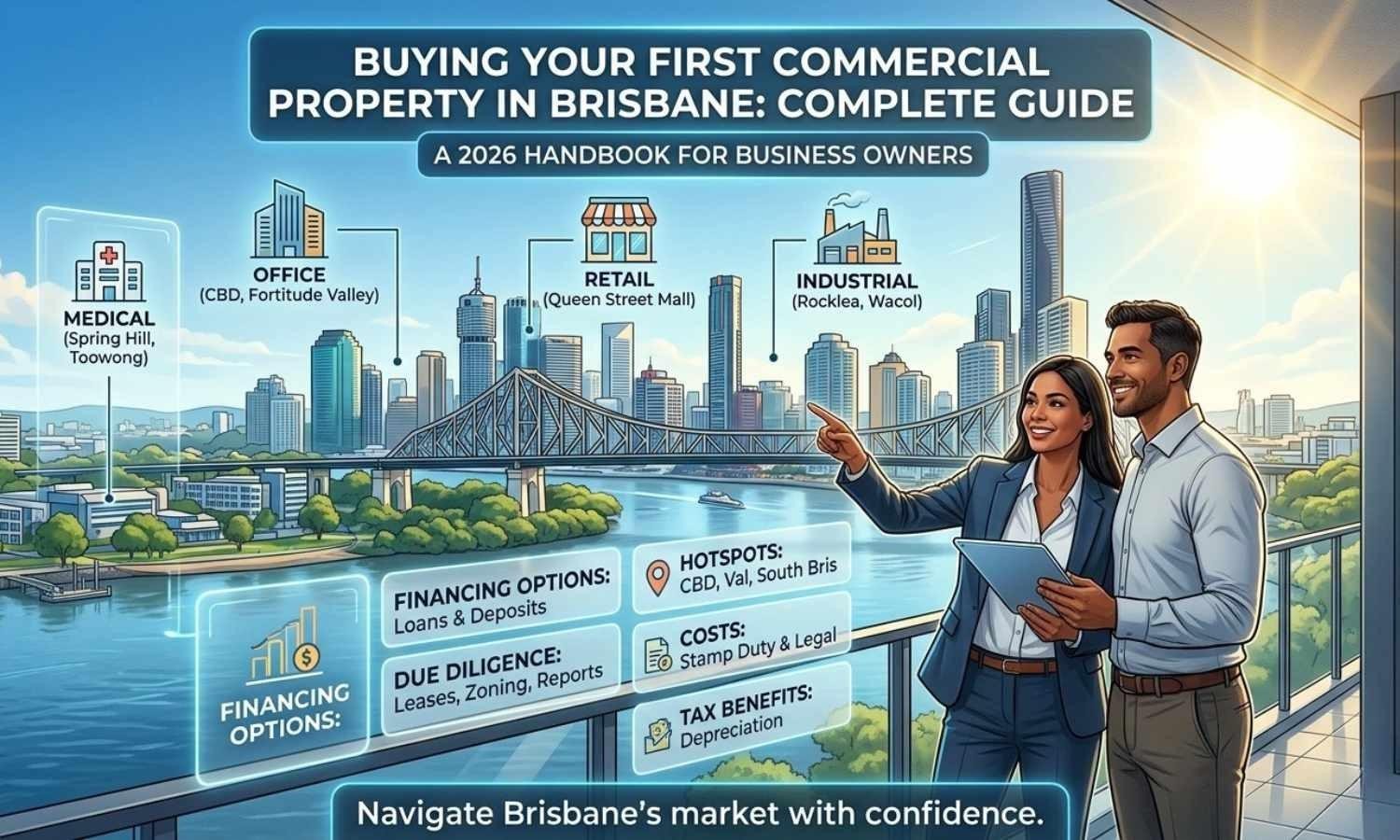
As a business owner, the decision to buy commercial property in Brisbane can be one of the most exciting and profitable moves you can make. It’s a big step towards growth and stability, but it can also be complex and overwhelming if you don’t know where to start.
Whether you’re tired of leasing or looking for a long-term investment, this guide will walk you through the process of buying commercial property in Australia, with a focus on the Brisbane market.
In this article, we’ll cover the key aspects of commercial property buying, including the types of properties available, financing options, due diligence, and legal considerations. By the end of this guide, you’ll have a clear understanding of how to make an informed decision when purchasing your first commercial property.
Commercial Property vs. Residential Property Investing
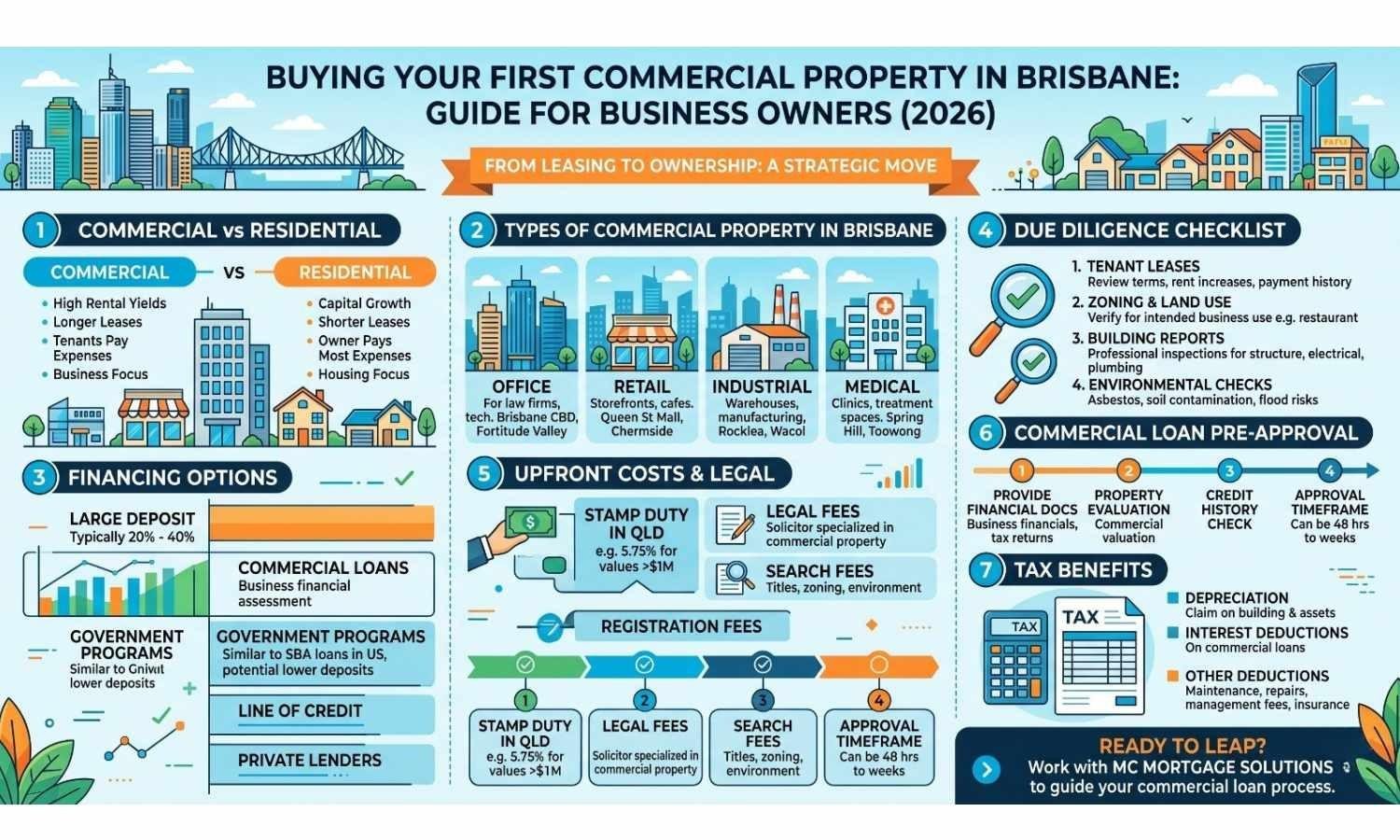
Before diving into the specifics of buying a commercial property in Brisbane, it’s essential to understand the differences between commercial and residential property investing. While residential property is typically purchased with the aim of providing housing, commercial property is bought with the goal of generating income through business operations.
Commercial properties include office spaces, retail outlets, industrial sites, and medical facilities. The main difference lies in the income potential, lease structure, and tenant relationships.
With residential properties, the focus is mainly on long-term appreciation and renting to tenants who live in the property. On the other hand, commercial property often offers higher rental yields and longer lease terms. Additionally, tenants are typically responsible for most property-related expenses, such as maintenance and taxes.
Types of Commercial Property: Office, Retail, Industrial, Medical
Commercial property comes in several forms, and understanding the different types is essential before making your purchase. In Brisbane, you’ll come across the following types:
Office Properties: These are spaces designed for businesses such as law firms, consultancies, and tech companies. Office properties can range from single suites to entire buildings. The Brisbane CBD and areas like Fortitude Valley and South Brisbane are prime office locations.
Retail Properties: These include storefronts and shopping centres. Retail properties are highly sought after by businesses such as clothing stores, cafes, or restaurants. Brisbane’s Queen Street Mall and Chermside Shopping Centre are popular retail spots.
Industrial Properties: These properties are used for manufacturing, warehouses, and distribution. Brisbane’s industrial suburbs such as Rocklea and Wacol have growing industrial property demand due to the city’s strategic location.
Medical Properties: Medical offices, clinics, or specialised treatment spaces are also a part of the commercial property market. Brisbane has several areas catering to healthcare businesses, especially in suburbs like Spring Hill and Toowong.
Each type of commercial property comes with its unique set of rules, regulations, and market conditions. It’s essential to identify the purpose of your investment before selecting the right type of property.
Financing Options & Deposit Requirements
When it comes to financing your first commercial property in Brisbane, understanding your options is crucial. Unlike residential properties, commercial properties typically require a larger deposit, usually ranging from 20% to 40% of the property’s value. Lenders often require this higher deposit because commercial properties are considered riskier investments compared to residential properties.
Here are the key financing options available:
Commercial Property Loans: These loans are specifically designed for buying commercial properties. Banks and lenders will assess your business’s financial health, the potential income from the property, and your creditworthiness.
SBA Loans (Small Business Administration): If you are purchasing the property for your own business, the Australian government may offer certain programs to help with financing, similar to the SBA loans in the U.S. Some banks and lenders offer loans with lower deposit requirements under government programs.
Line of Credit: If you have a solid credit history, a line of credit from a bank or financial institution can also be a good option to fund your commercial property purchase.
Private Lenders and Peer-to-Peer Lending: These are alternative financing options if you don’t meet traditional loan criteria. While these loans can be faster to secure, they may come with higher interest rates.
Due Diligence Checklist: Tenant Leases, Zoning, Building Reports
Due diligence is a critical part of buying any property, but it’s even more important when purchasing commercial property. There are specific factors you need to consider before signing any contracts:
Tenant Leases: If the commercial property is already leased, carefully review the existing leases. Look at lease terms, rent increases, and tenant payment history to ensure that your investment will provide a steady income stream. Understand the length of the leases and the type of tenants (long-term or short-term).
Zoning and Land Use: It’s essential to verify that the property is zoned for the intended business use. In Brisbane, local councils (such as the Brisbane City Council) regulate zoning laws. For instance, if you want to open a restaurant, the property must be zoned for commercial use and approved for that purpose.
Building Reports and Condition: Always hire a professional to conduct a building inspection and review the property’s condition. Look for any structural issues, electrical or plumbing problems, or potential maintenance costs. A building report will give you an insight into any future repairs that may be needed.
Environmental Checks: Make sure that the property is free from environmental hazards like asbestos, soil contamination, or flooding risks. Conduct environmental checks to avoid unexpected costs down the road.
Brisbane Commercial Property Hotspots
The Brisbane commercial property market offers several areas with strong growth potential. Some of the best hotspots for commercial property investment in 2026 include:
Brisbane CBD: The city’s central business district is always in demand for office spaces, with steady demand from businesses looking for prime locations.
Fortitude Valley: This trendy area has seen growth in retail and office spaces due to its vibrant culture and proximity to the CBD. It’s popular with startups and tech companies.
South Brisbane: Known for its arts and cultural precinct, this area is an excellent location for medical and office properties. It’s also close to major transport links and the city’s shopping areas.
Rocklea and Wacol: If you’re interested in industrial properties, these two suburbs are key industrial hubs in Brisbane, offering access to key transport routes and logistical advantages.
Stamp Duty & Legal Costs in Queensland
When buying commercial property in Queensland, stamp duty is one of the significant upfront costs. The amount you’ll pay depends on the property’s value and its location. In Queensland, commercial properties are taxed at a higher rate than residential properties, and you’ll be required to pay stamp duty at a rate of 5.75% on property values over $1,000,000.
In addition to stamp duty, there are other legal costs involved in the property purchase, such as:
Legal Fees: Engage a solicitor who specializes in commercial property to help you navigate contracts, leases, and regulatory requirements.
Search Fees: These include land title searches, zoning checks, and environmental assessments.
Registration Fees: Costs associated with registering the property transfer with the government.
Commercial Loan Pre-Approval Process
Getting pre-approval for a commercial loan is a great way to understand your budget and streamline the purchasing process. If you’re based in Brisbane, you may even be able to secure pre-approval in Brisbane within 48 hours depending on the complexity of your financials. The pre-approval process usually involves:
Providing Financial Documentation: Lenders will require business financials, tax returns, and personal financial details.
Property Evaluation: A commercial property valuation will be conducted to determine its market value.
Credit History Check: Lenders will review your credit score to assess your eligibility.
Approval Timeframe: The pre-approval process can take anywhere from a few days to a few weeks, depending on the complexity of your financials and the lender’s requirements.
Tax Benefits: Depreciation & Deductions
One of the key advantages of buying a commercial property in Brisbane is the potential for tax benefits. Understanding positive and negative gearing is essential before making your investment decision, as it directly impacts your tax position. Some of the main tax advantages include:
Depreciation: Commercial property owners can claim depreciation on the building and its assets. This can offset taxable income and lower your tax bill.
Interest Deductions: The interest paid on commercial property loans is tax-deductible.
Other Deductions: Maintenance costs, repairs, property management fees, and even insurance premiums can be deducted from your taxable income.
Always consult a tax advisor to understand the full scope of deductions you can claim based on your property purchase.
FAQs
Buying commercial property offers long-term investment benefits, potential capital growth, and control over the space. Leasing is ideal for businesses looking to avoid large upfront costs and maintain flexibility without the long-term commitment.
Ongoing costs include property maintenance, insurance, council rates, utilities, and potentially management fees. Property owners must also budget for repairs, legal costs, and tax obligations like land tax.
Yes, you can purchase commercial property through a Self-Managed Super Fund (SMSF) in Australia. However, the property must meet strict criteria, such as being for business use and not for personal benefit.
Typically, a 20% to 40% deposit is required for commercial property loans. The exact amount depends on the lender, the type of property, and the buyer’s financial profile. If you’re concerned about the deposit size, exploring low deposit home loans may provide some useful context on how lenders approach deposit requirements.
Start by identifying your business needs and budget. Research key Brisbane commercial property areas, like the CBD, Fortitude Valley, and South Brisbane, and consult a real estate agent specializing in commercial properties to find the best options.
Commercial leases are more complex and involve longer terms, often 3-5 years or more. They typically include clauses on rent reviews, maintenance responsibilities, and additional costs like taxes and insurance, which tenants must pay.
Securing a commercial property loan with bad credit can be challenging, but some lenders specialize in financing for buyers with poor credit. You may need a larger deposit and can explore private lenders or guarantor loans for better approval chances.
The Brisbane commercial property market is expected to remain strong in 2026, with ongoing demand for office spaces, retail properties, and industrial spaces. Infrastructure development and population growth are key drivers of this demand, especially in areas like Fortitude Valley and Chermside
Risks include tenant vacancies, fluctuating rental yields, unexpected maintenance costs, and market downturns. It’s essential to conduct thorough due diligence and have a clear business plan to mitigate these risks.
Investors can take advantage of depreciation on the property, interest deductions on loans, and other operating expenses like maintenance and management fees. Always consult a tax professional to maximize tax benefits.
Conclusion
Buying your first commercial property in Brisbane can be an exciting and profitable step for your business. By understanding the different property types, securing the right financing, and performing due diligence, you can make an informed and confident decision. The Brisbane market offers plenty of opportunities, whether you’re looking to invest in office space, retail, industrial, or medical properties.
If you’re ready to take the leap, consider working with a mortgage broker at MC Mortgage Solutions to guide you through the commercial property loan process and ensure your investment is a success.