
Commercial Land Loans Brisbane: Finance for Development & Investment (2026 Guide)
As Brisbane continues its development boom, many investors and developers are looking for ways to finance the purchase of commercial land for their projects. Whether you’re building a commercial property for rental income or developing a site for resale, securing the right commercial land loan is critical.
In this guide, we’ll cover everything you need to know about commercial land loans in Brisbane, from the differences between commercial and residential land loans to the approval process, interest rates, and exit strategies. With development finance becoming increasingly specialized, it’s essential to understand how these loans work to secure your next big project.
Commercial Land vs. Residential Land Loans
When it comes to financing land, it’s important to understand the difference between commercial land loans and residential land loans. While both types of loans can be used to purchase land, commercial property loans are specifically designed for properties that are intended for business use or development.
These loans tend to have higher interest rates and stricter lending requirements due to the increased risks associated with commercial properties. In contrast, residential land loans are used to purchase land intended for residential properties or personal use. They typically come with lower interest rates and more flexible lending terms.
Developers in Brisbane, especially those looking to capitalize on the growing demand for commercial properties, will likely find commercial land loans to be the best option for financing larger-scale projects, like office buildings, retail spaces, or mixed-use developments.
Lender Requirements: Experience, Deposit, and Feasibility
To secure a commercial land loan, lenders often have specific requirements that borrowers must meet. One of the key factors is experience. Lenders prefer borrowers with a proven track record in property development or commercial land investment. If you’re a first-time developer, securing financing might be more challenging unless you can demonstrate solid feasibility studies and business plans.
Understanding 3 reasons home loan applications are declined can help you prepare a stronger application and avoid common pitfalls that cause lenders to reject borrowers.
Another crucial requirement is the deposit. For commercial land loans, the deposit is typically higher than for residential loans, often ranging from 20% to 30% of the purchase price. The larger deposit helps reduce the lender’s risk, especially if the land is being purchased for development.
Alongside the deposit, lenders will closely examine the feasibility of your project. They want to ensure that your development plans are financially viable and that the project has a realistic chance of success. A solid feasibility study, outlining projected costs, development timelines, and expected returns, will significantly increase your chances of securing a loan.
Development Finance vs. Investment Land Purchase
Understanding the difference between development finance and an investment land purchase is essential when applying for a commercial land loan.
Development finance is typically used by builders and developers to finance a project that involves constructing new buildings or infrastructure. It may involve higher loan amounts, more complex application processes, and a thorough assessment of the development’s feasibility. You can explore our dedicated commercial property loans page to understand what financing options are available for your project type.
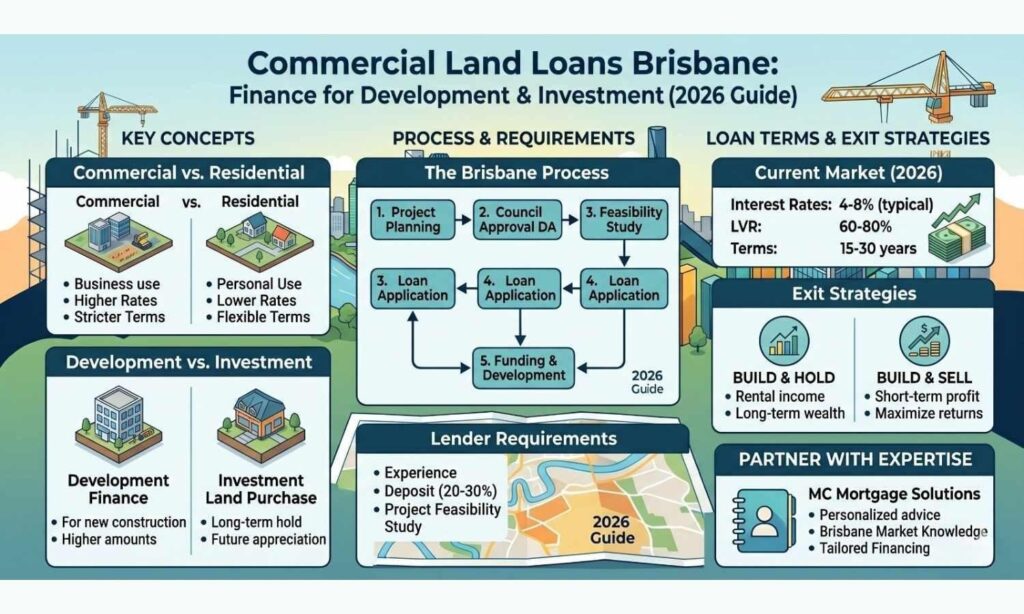
On the other hand, an investment land purchase refers to buying land for long-term holding and potential future appreciation in value. For investment purposes, you might not intend to develop the land immediately. If you’re considering this path, our guide on 10 tips for choosing an investment property provides valuable insight into making smarter investment decisions.
When considering a commercial land loan in Brisbane, developers need to determine whether they are seeking development finance or an investment land loan, as the requirements and terms differ.
Brisbane Council Approval Process
In Brisbane, the Brisbane City Council plays a significant role in the approval process for any development project. Before you begin developing commercial land, you must go through the necessary planning and approval stages. This includes submitting a development application (DA), which outlines your proposed project and how it will comply with local zoning laws and regulations.
The approval process can be time-consuming, and it’s essential to factor in these delays when securing development finance. Lenders will often require that developers have all necessary approvals in place before funding a project.
Moreover, understanding local regulations related to land zoning, environmental impact assessments, and infrastructure planning will be critical. Each project may have unique requirements depending on its location within Brisbane. Developers should work closely with architects, engineers, and local planning consultants to ensure their projects meet all council guidelines.
Interest Rates & Loan Terms
Interest rates for commercial land loans can vary depending on the lender, the borrower’s financial profile, and the specifics of the project. For development finance, interest rates tend to be higher than for regular commercial land purchases due to the added risk associated with construction projects.
One of the most important decisions you’ll face is choosing between a variable vs fixed rate loan, as each option carries different implications for your cash flow and long-term repayment strategy.
In Brisbane, interest rates on commercial land loans typically range from 4% to 8%. However, this can fluctuate based on the size of the loan, your credit history, and your experience in property development. Loan terms for commercial land loans also vary but generally range from 15 to 30 years, with the option to extend the term or refinance the loan as the development progresses.
Lenders may offer interest-only periods during the construction phase to ease cash flow pressure on developers. Once the project is completed, the loan typically converts to a standard principal and interest loan. To better understand your options at this stage, read our guide on how does refinancing work to plan your next financial move confidently.
Exit Strategies: Build & Hold vs. Build & Sell
An important consideration for developers when securing commercial land loans is having a clear exit strategy. This refers to how you plan to pay off the loan and realize a return on your investment.
Build & Hold: In this strategy, the developer builds the property and holds it for rental income or capital appreciation over time. This strategy requires a longer investment horizon and can be suitable for developers looking to create long-term wealth through commercial property ownership. Understanding the pros and cons of positive and negative gearing is essential when evaluating whether a build and hold strategy aligns with your financial goals.
Build & Sell: The build and sell strategy involves developing the property and selling it once construction is complete. This allows developers to quickly cash out on their investment. Developers using this strategy typically seek to maximize short-term profits and minimize long-term risks.
Lenders will typically inquire about your exit strategy to understand how you plan to repay the loan. Having a solid exit strategy will not only improve your chances of securing finance but will also ensure that your project stays on track and financially viable.
MC’s Development Finance Expertise
MC Mortgage Solutions specializes in helping developers and investors secure commercial land loans and development finance. Our team has in-depth knowledge of the Brisbane property market, and we work closely with our clients to secure the best loan terms tailored to their specific projects.
For investors looking at more advanced strategies, our SMSF property loans Brisbane guide outlines how self-managed super funds can be used as a powerful vehicle for commercial property investment.
Whether you’re purchasing land for development or investing in commercial properties, MC Mortgage Solutions offers personalized advice and financing solutions to help you achieve your goals.
FAQs
Commercial land loans are for purchasing land intended for business use or development, while residential land loans are for properties meant for personal living. Commercial loans often have higher interest rates and more stringent requirements due to the risks involved in business development.
To apply for a commercial land loan in Brisbane, you’ll need to provide financial statements, a feasibility study, proof of experience in property development (if applicable), and details of your intended project. It’s advisable to work with a mortgage broker who understands Brisbane development finance.
While bad credit may limit your options, it is possible to secure a commercial land loan if you offer a significant deposit (usually 20% or more) and a clear development plan. Lenders will consider the feasibility of your project and the land’s value. Learn more about the common reasons applications fail in our guide on 3 reasons home loan applications are declined.
Council approval is essential for any commercial land development project. Lenders often require evidence of Brisbane City Council approval before providing finance. This ensures your development meets zoning laws, building codes, and environmental requirements.
Approval for a commercial land loan in Brisbane typically takes 2-4 weeks, depending on the complexity of the project, the lender’s requirements, and the necessary council approvals. Find out more about whether pre-approvals are worthwhile in a changing rate environment to speed up your financing timeline.
Interest rates for commercial land loans generally range between 4% and 8%, depending on the lender, the loan amount, and your credit history. Developers may pay slightly higher rates for development finance due to the added risks.
The Loan-to-Value Ratio (LVR) for commercial land loans typically ranges from 60% to 80%. This means you may need to provide a 20-40% deposit, especially for higher-risk developments or projects in less desirable locations. For a full breakdown of how LVR works, read our guide on what is loan to value ratio (LVR).
Yes, commercial land loans can be used for purchasing agricultural land, but the terms may differ. Lenders may require specific conditions related to the land’s intended use, including the zoning and potential for income-generating activities like farming or leasing.
Development finance often involves interest-only repayments during the construction phase. After the project is completed, the loan may convert to principal and interest repayments, or you may refinance the loan based on the completed project’s value.
An exit strategy is how you plan to repay your commercial land loan. For developers, common exit strategies include build and sell, where the property is sold after completion for a profit, or build and hold, where the property is retained for rental income. Understanding positive and negative gearing will help you choose the right exit strategy for your financial situation.
Conclusion
Securing a commercial land loan in Brisbane can be an excellent way to finance your next development or investment project. By understanding the differences between commercial land loans and residential loans, lender requirements, the approval process, and exit strategies, you can make informed decisions about your investment. With the ongoing development boom in Brisbane, now is a great time to explore commercial land opportunities and take advantage of the specialized financing options available.