
Does Income Protection Cover Redundancy in Australia? What You Need to Know (2026)
In Australia, many people wonder if income protection insurance covers redundancy. While redundancy can be a major financial blow, income protection insurance (IP) generally doesn’t cover it. However, there are exceptions and other ways to protect your income during job loss.
This article explains how income protection works, what it covers, and explores alternatives like involuntary unemployment cover. You’ll also find strategies to prepare financially for redundancy, such as emergency funds and mortgage protection. Let’s break down the facts so you can make informed decisions about protecting your income.
1. Does Income Protection Insurance Cover Redundancy?
Income protection insurance (IP) is designed to replace a portion of your income if you can’t work due to illness or injury. However, redundancy is not typically included in most standard IP policies in Australia. If you lose your job due to redundancy, it won’t trigger an income protection claim.
Many people are surprised to learn this, but redundancy is seen as a result of economic conditions or business decisions, not an illness or injury. Therefore, it’s not covered by regular IP policies. Understanding your financial obligations tied to your mortgage is just as important as understanding your insurance especially when income stops unexpectedly.
Exceptions to the Rule: Some insurers may offer redundancy coverage as an add-on to their policies, but these are not common. If available, these add-ons are usually more expensive and come with conditions. Always read the terms and conditions of your policy to understand exactly what is covered.
2. Involuntary Unemployment Cover: A Separate Product
While income protection doesn’t cover redundancy, there is another option available: involuntary unemployment cover (IUC). This is a separate insurance product designed to provide financial support if you lose your job due to redundancy or other reasons outside your control.
One of the most pressing concerns for homeowners facing redundancy is understanding what happens to your mortgage if you lose your job and involuntary unemployment cover can be a key part of the answer. It works similarly to income protection insurance, but instead of covering you for illness or injury, it covers you in the event of job loss. The amount you receive is typically a percentage of your previous income and can last anywhere from 6 months to a year, depending on the policy.
Key Points to Know About IUC:
- Eligibility: Not all people will qualify for involuntary unemployment cover. It’s important to check the eligibility criteria and ensure you meet them before purchasing a policy.
- Coverage Period: The duration of the payout can vary, so it’s essential to choose a policy that matches your needs.
- Exclusions: Many policies have exclusions, such as voluntary resignation or redundancy due to misconduct, so make sure you understand the terms before buying.
3. What Income Protection Insurance Does Cover
Income protection insurance is primarily intended to cover loss of income due to illness, injury, or disability. If you’re unable to work due to health issues, IP will pay a percentage of your income, often around 75%, until you can return to work. Exploring the full range of borrowing protection options available in Australia can help you understand how IP fits alongside other financial safeguards.
Here’s a breakdown of what income protection typically covers:
- Illness: If you’re diagnosed with a serious illness (e.g., cancer, heart disease, etc.), income protection helps cover your expenses while you take time off to recover.
- Injury: Whether it’s an accident, sports injury, or a long-term physical injury, income protection ensures you continue receiving income while you focus on recovery.
- Mental Health: Increasingly, IP policies are covering mental health conditions, such as depression or anxiety, provided they are documented and meet the insurer’s requirements.
Income protection insurance is important, but remember, it won’t help you if you lose your job due to redundancy. For that, you need a different type of coverage, such as involuntary unemployment cover.
4. Mortgage Protection Insurance: A Potential Alternative
Mortgage protection insurance is an option worth considering if you’re concerned about maintaining your mortgage repayments in the event of redundancy or illness. Unlike income protection, which covers your overall income, mortgage protection insurance is specifically designed to cover your mortgage repayments.
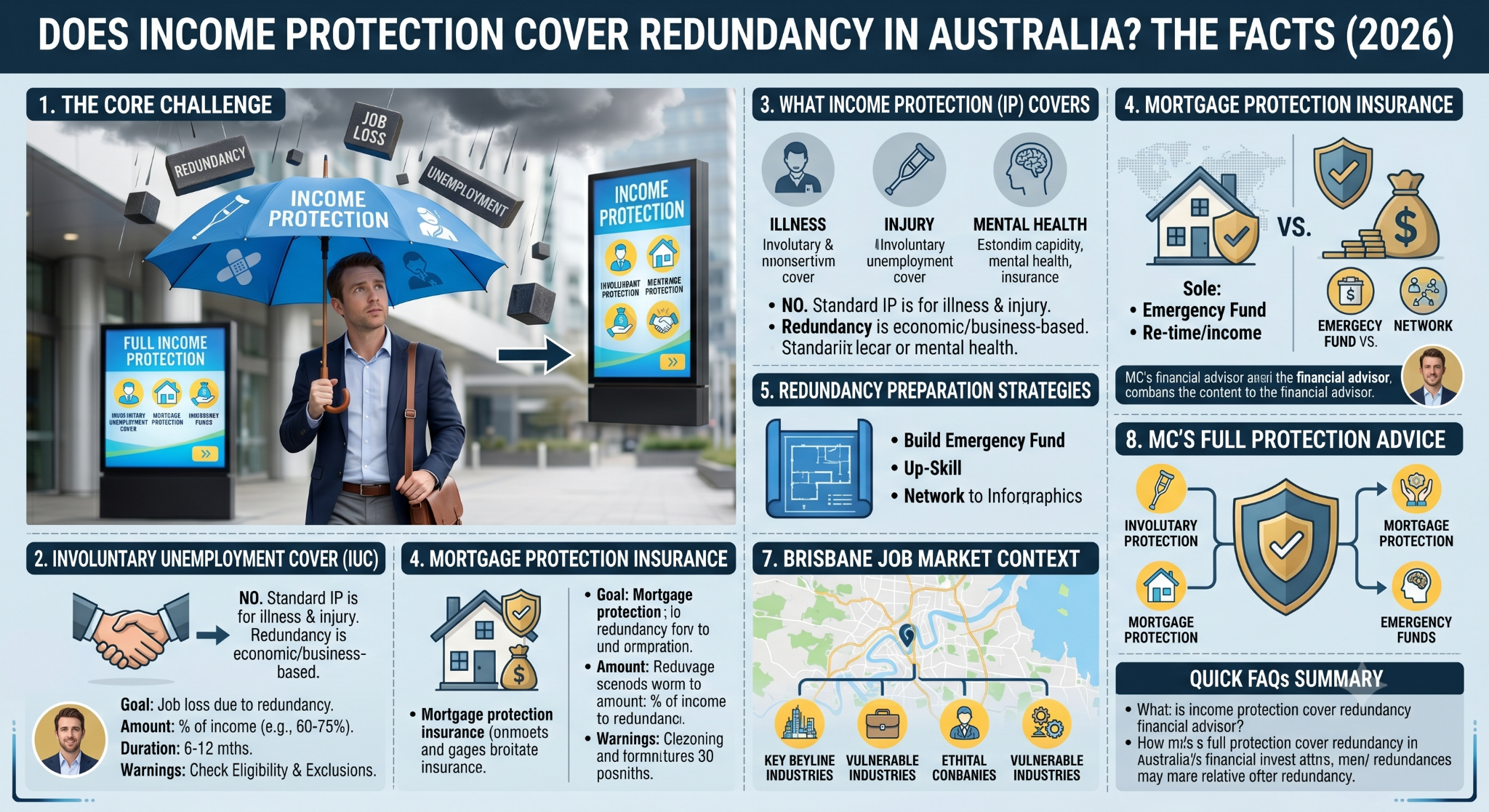
Before committing to any policy, it’s worth reviewing the costs and benefits of protecting your home loan so you can make a well-informed financial decision. If you’re unable to work due to illness, injury, or redundancy, mortgage protection insurance will help ensure your mortgage continues to be paid.
It’s also important to consider that redundancy can significantly affect your borrowing capacity during financial hardship, which is why having the right protection in place before you need it matters.
Advantages of Mortgage Protection Insurance:
- Focused Coverage: It covers only your mortgage repayments, so it may be less expensive than a full income protection policy.
- Peace of Mind: It ensures your home isn’t at risk if you face a period of unemployment.
However, mortgage protection insurance does not cover other living expenses like groceries or utility bills. It’s a good idea to pair this insurance with an emergency fund or an income protection policy for complete financial security.
5. Redundancy Preparation Strategies
Though redundancy isn’t covered by income protection insurance, there are several proactive steps you can take to protect yourself financially. In fact, taking steps to strengthen your financial position proactively can make a significant difference when you need access to credit or support during a job transition.
- Build an Emergency Fund: One of the best ways to prepare for redundancy is by creating a financial cushion. Having an emergency fund of 3 to 6 months’ living expenses can help you manage during the time you’re looking for a new job.
- Up-Skill or Reskill: In a rapidly changing job market, the ability to adapt and learn new skills can make you more valuable to employers. Investing in training and development can help you stay competitive and less likely to be laid off.
- Network: Keep your professional network active. Sometimes, job opportunities arise from connections you’ve made in your industry. Stay in touch with your colleagues and industry peers to stay informed about job openings.
Preparing for redundancy means you won’t be caught off guard when it happens. Having a strategy in place can reduce the financial strain if it occurs.
6. Emergency Fund vs. Insurance: Which One is Better?
When it comes to protecting yourself from job loss, both an emergency fund and insurance have their roles. It’s also worth considering managing repayments during financial uncertainty, as debt consolidation can sometimes reduce your monthly obligations and give you more breathing room.
- Emergency Fund: This is a pool of savings that you can use in case of unforeseen events, like redundancy or unexpected expenses. It’s easy to access and can be used to cover immediate needs, such as rent and utilities.
- Insurance: Income protection and involuntary unemployment cover provide long-term financial support. While an emergency fund can help in the short term, insurance is designed to replace a portion of your income over an extended period, ensuring your financial stability.
- Which One is Better? Ideally, you should have both an emergency fund and insurance. The emergency fund will cover your immediate needs, while insurance will provide ongoing financial support. Together, they create a comprehensive safety net.
7. Brisbane Job Market Context
Brisbane, like many other cities, has a job market that can be affected by economic conditions. Understanding Brisbane’s current economic and property market conditions gives important context for assessing your redundancy risk, especially in sectors like retail, construction, and tourism that are more susceptible to downturns.
If you’re working in an industry that’s vulnerable to economic shifts, it’s a good idea to have extra protection in place. This could include redundancy insurance or an emergency fund to cover your expenses in case you lose your job.
Understanding your industry’s stability in Brisbane can help you make informed decisions about your financial protection.
8. MC’s Full Protection Advice: Insurance + Financial Planning
When it comes to redundancy and job loss, financial planning and insurance should go hand-in-hand. To fully protect your income, you should consider a combination of the following:
- Income Protection Insurance: This will protect you if you’re unable to work due to illness or injury.
- Involuntary Unemployment Insurance: This covers you if you lose your job due to redundancy, offering peace of mind during times of economic uncertainty.
- Mortgage Protection Insurance: If you’re worried about keeping up with mortgage payments, this insurance can provide coverage specifically for your home loan.
- Emergency Fund: Having liquid savings can bridge the gap while you search for new work.
A comprehensive financial plan should incorporate all of these elements to ensure you’re covered no matter what happens. The best first step is to speak to a mortgage broker about your protection strategy they can help you identify gaps in your coverage and connect you with the right solutions for your situation.
FAQs
Income protection insurance covers you if you can’t work due to illness, injury, or disability, replacing a portion of your income (usually 75%). On the other hand, redundancy insurance, such as involuntary unemployment cover, is designed specifically for job loss due to redundancy.
No, income protection insurance in Australia does not cover voluntary redundancy. If you choose to leave your job, either due to personal reasons or a voluntary resignation offer, it won’t trigger an income protection claim. However, involuntary unemployment insurance could be an alternative in this case, but it is specifically for those made redundant by their employer.
No, involuntary unemployment cover (IUC) is not included in all income protection policies. It is often offered as a standalone product or as an add-on to existing income protection policies. If you’re interested in this coverage, it’s important to check with your insurer to see if they offer it and whether it fits your specific needs.
While involuntary unemployment cover (IUC) can help during redundancy, it comes with exclusions. Common exclusions include: redundancy caused by voluntary resignation or misconduct, redundancy in a company you own or have significant shares in, a period of unemployment before the cover starts, and pre-existing health conditions that limit coverage.
Involuntary unemployment cover typically replaces a portion of your salary, often around 60% to 75%. The payout duration can vary between insurers, usually offering coverage for up to 12 months, depending on the policy. Always check the terms to see the exact percentage and how long you can receive payments.
Yes, income protection insurance is available for self-employed individuals in Australia. If you are a freelancer or run your own business, income protection can cover your lost income if you become ill or injured and are unable to work. Self-employed individuals should look for policies that provide coverage based on their income and business structure.
Many income protection policies in Australia now include coverage for mental health conditions, such as anxiety, depression, and stress-related disorders. However, this coverage can vary depending on the insurer and policy. Some insurers may require additional documentation from your doctor or therapist to validate the claim.
Mortgage protection insurance is specifically designed to cover your mortgage repayments if you become unable to work due to illness, injury, or redundancy. Unlike income protection, which covers a percentage of your entire income, mortgage protection focuses only on your home loan.
In most cases, you cannot claim both income protection and involuntary unemployment cover for the same event. Some policies may allow for partial claims, but this depends on the insurer.
Before purchasing any insurance, it’s crucial to assess your current financial situation. Key steps include: evaluating your savings, assessing how much income you’d need to replace, researching and comparing policies, considering complementary products like mortgage protection, and consulting a financial planner to tailor a strategy to your needs.
Conclusion
In conclusion, while income protection insurance does not typically cover redundancy, there are other options available, such as involuntary unemployment cover and mortgage protection insurance. By building an emergency fund and planning ahead, you can prepare for redundancy and reduce its financial impact. Ensure you have a combination of insurance and savings to keep your finances secure during challenging times. Consult with an insurance advisor or financial planner to make the best decisions for your future.