
Understanding Negative and Positive Gearing in Brisbane
Investing in property is a popular choice for many Australians seeking long-term financial growth. However, for investors, understanding the tax implications and strategies behind property investment is key to success. To explore tailored financing options, visit our investment loans page to see how MC Mortgage Solutions can support your strategy.
Two common terms in property investing are negative gearing and positive gearing. Both strategies can have different effects on your tax situation and overall investment returns. In this guide, we’ll explore the differences between negative and positive gearing, how they impact your tax position, and how these strategies apply to property investment in Brisbane. We’ll also cover the latest tax rules and what they mean for investors in 2026.
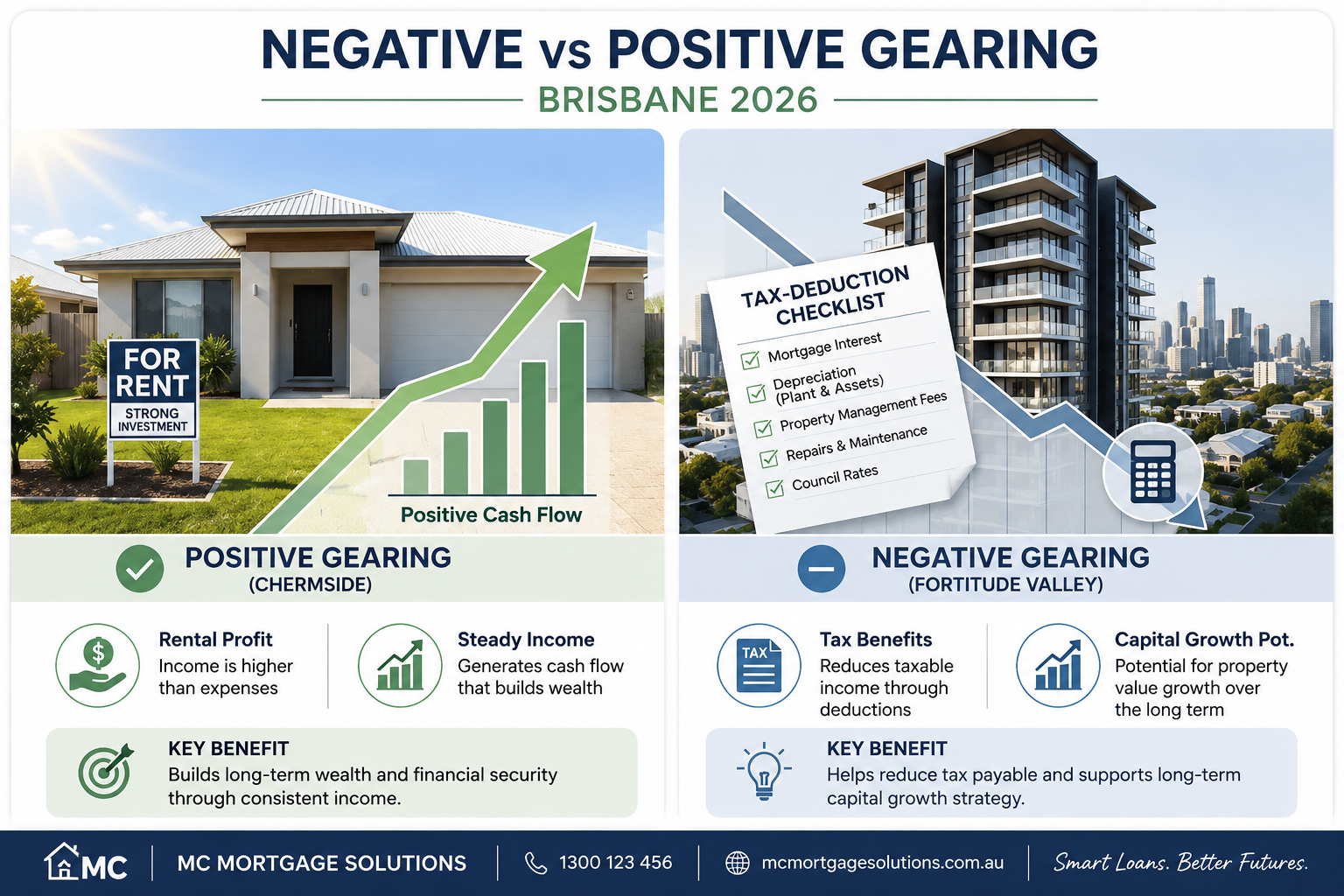
What is Negative Gearing?
Negative gearing is a popular strategy used by property investors in Australia. It occurs when the cost of owning and maintaining a property exceeds the income generated from that property. This often happens when rental income does not cover mortgage repayments, property management fees, insurance, maintenance costs, and other expenses.
How Does Negative Gearing Work?
Let’s say you own an investment property in Brisbane, and the rental income you receive is $20,000 per year. However, your total costs (mortgage interest, maintenance, insurance, etc.) amount to $30,000 per year. The $10,000 shortfall is your loss, or the “negative” part of negative gearing.
Tax Benefits of Negative Gearing
The great thing about negative gearing in Australia is that it allows investors to use the losses they incur from their property to offset their other income. For example, if you’re earning a salary and you lose money on your investment property, you can deduct that loss from your taxable income, which can result in a lower tax bill. This means you could get a tax refund, making it a more attractive option for many investors. Want to understand more about how these deductions work in practice? Read our guide on positive and negative gearing pros and cons for a deeper breakdown.
However, it’s important to remember that negative gearing can create a short-term loss. Investors are essentially betting that the property will increase in value over time, compensating for the short-term losses.
What is Positive Gearing?
Positive gearing, on the other hand, occurs when the income generated from your investment property exceeds the expenses associated with owning it. This is a scenario where the rental income from your property provides you with a net positive cash flow.
Imagine you have a rental property in Brisbane, and the rental income is $25,000 per year, while the costs (mortgage, maintenance, insurance, etc.) total $20,000 per year. This leaves you with a $5,000 profit, which is considered the “positive” part of positive gearing.
Tax Implications of Positive Gearing
With positive gearing, you don’t get the same tax benefits as with negative gearing because you are making a profit. The rental income you earn is considered taxable, and you’ll need to declare it as part of your overall income.
However, many investors prefer positive gearing because it provides an immediate cash flow. This can be a great strategy for those looking to generate a steady income from their investments, especially in areas where property prices are more stable.
Negative vs Positive Gearing: Which Strategy Makes Sense?
Both negative and positive gearing have their place in a property investor’s portfolio, and choosing the right strategy depends on several factors, including your financial goals, the type of property you’re investing in, and your long-term strategy.
When Negative Gearing Works Best
- Long-Term Capital Growth: Negative gearing is typically used by investors who are willing to take short-term losses for long-term capital growth. Investors using this strategy usually focus on properties that are expected to increase significantly in value over time.
- Tax Benefits: Investors who are looking to reduce their taxable income can benefit from the deductions available through negative gearing. This strategy is more beneficial for higher-income earners who are looking to lower their tax liability.
- Higher Expenses: Negative gearing is often used for newer properties or those in high-demand areas that may have higher upfront costs, such as Brisbane’s inner-city suburbs like Newstead or Fortitude Valley.
Investors focused on long-term capital growth often revisit their loan structure as equity builds. Learn when is a good time to refinance your home loan to maximise your investment returns.
When Positive Gearing Works Best
- Steady Cash Flow: Positive gearing is a good option for those seeking a steady income stream from their property. This strategy can work well for investors looking for consistent rental income to support their lifestyle or portfolio.
- Established Properties: Positive gearing is often more common with established properties in mature suburbs with steady demand and stable rent returns. Brisbane suburbs like Chermside and Stafford can offer properties with reliable rental yields.
- Lower Risk: Positive gearing tends to be a lower-risk strategy since you’re generating income from day one, reducing the likelihood of financial strain or having to dip into savings.
Tax Implications Example for Negative vs Positive Gearing
Understanding the tax impact of your investment strategy can be a bit tricky, but some online calculators can help you assess the potential tax savings from negative gearing or the additional taxable income from positive gearing.
How to Calculate Tax Savings from Negative Gearing
For example, if your investment property incurs a $10,000 loss from negative gearing and you are in the 32.5% tax bracket, your potential tax savings could be around $3,250 ($10,000 x 32.5%).
How Positive Gearing Affects Your Taxes
With positive gearing, if you earn $5,000 in profit from your property, that $5,000 will be added to your taxable income. If you’re in the same 32.5% tax bracket, you’ll pay an additional $1,625 in tax on that profit ($5,000 x 32.5%).
Brisbane Property Examples: Negative vs. Positive Gearing
In Brisbane, the choice between negative or positive gearing depends largely on the location and type of property you are investing in. Choosing the right suburb is just the beginning. Check out our 10 tips for choosing an investment property to make a more informed decision in the Brisbane market.
Negative Gearing Example
- Suburb: Fortitude Valley
- Property Type: New apartment
- Annual Rent: $30,000
- Costs (mortgage, maintenance, etc.): $40,000
- Outcome: A $10,000 negative gearing loss, which can be deducted from your overall taxable income.
Positive Gearing Example
- Suburb: Chermside
- Property Type: Established house
- Annual Rent: $25,000
- Costs (mortgage, maintenance, etc.): $20,000
- Outcome: A $5,000 positive cash flow, which is taxable as income.
Depreciation Schedules Explained
Depreciation rules can vary depending on the age of the property, the type of asset, and whether the property is new or established. A quantity surveyor or accountant can help confirm what depreciation deductions may be available.
The Australian Taxation Office (ATO) allows property investors to claim depreciation on the building structure (typically 2.5% per year for 40 years) and the assets inside the property (such as carpets, dishwashers, etc.). This can be a significant deduction for property investors and can further reduce the impact of negative gearing.
Tax Deductions Checklist for Investors
When investing in property, you may be eligible for several tax deductions. Here’s a quick checklist. Managing these deductions effectively is easier with professional support. Explore our financial services to see how MC Mortgage Solutions can help you stay on top of your investment finances.
- Interest on the loan for purchasing the property
- Depreciation on the building and assets
- Property management fees
- Insurance premiums
- Repairs and maintenance
- Council rates
- Legal and accounting fees
These deductions help to reduce the taxable income generated from your property, potentially leading to a lower tax bill or a tax refund, depending on whether you’re negatively or positively geared.
Cash Flow Impact for Property Investors
Understanding your property’s cash flow is crucial, especially when choosing between negative and positive gearing. Use our loan repayment calculator to run your own cash flow numbers and see how your investment property stacks up month to month.
- Negative Gearing: If your property generates less income than the costs, you may need to cover the shortfall. This could affect your personal budget, especially if your property’s value doesn’t increase as expected.
- Positive Gearing: A positive cash flow allows you to keep more money in your pocket and can be used to reinvest in other properties or save for future expenses.
Important Tax Considerations for 2026
For investors, it’s important to stay updated on any changes to tax rules. As of 2026, some minor changes might affect depreciation claims or capital gains tax exemptions for investment properties. Be sure to consult with a tax advisor or accountant to understand how these changes could impact your investment strategy.
Frequently Asked Questions (FAQs)
Negative gearing occurs when property expenses exceed rental income, allowing for tax deductions, while positive gearing generates more rental income than expenses, leading to taxable profit.
Negative gearing allows investors to deduct property losses from their taxable income, potentially lowering their tax bill and resulting in a refund if the losses offset other earnings.
Yes, investors can claim depreciation on the building structure and assets, such as appliances, which can further reduce taxable income for both negatively and positively geared properties.
Yes, positive gearing can be ideal for investors seeking immediate cash flow from rental income, particularly in established Brisbane suburbs with steady rental demand, like Chermside or Stafford.
You can claim deductions such as mortgage interest, property management fees, repairs, insurance, council rates, and depreciation on your Brisbane investment property.
Final Thoughts
conclusion
In conclusion, choosing between negative gearing and positive gearing depends on your investment goals, cash flow needs, and the property market in Brisbane. Negative gearing is beneficial for long-term capital growth and tax deductions, while positive gearing offers immediate cash flow with fewer tax advantages. By understanding the differences and carefully assessing your property’s performance, you can make an informed decision that works best for your financial situation.
Whether you’re just starting or expanding your investment portfolio in Brisbane, speaking with a professional makes all the difference. Contact MC Mortgage Solutions today to get personalised advice on your property investment strategy.