
Investment Loan Rates Comparison 2026 | MC Mortgage Solutions
In 2026, property investment in Australia continues to be an attractive option for many, with the potential for capital growth and passive income. However, securing the best investment loan rates is crucial to maximizing your returns. Whether you’re a first-time investor or an experienced property owner, finding the right investment loan is key to the success of your investment strategy.
In this article, we’ll break down the current investment loan rates in Australia, comparing lenders, discussing interest-only vs. principal and interest (P&I) rates, and exploring the factors that impact rates—like loan-to-value ratio (LVR). Plus, we’ll take a closer look at some of Brisbane’s top investment hotspots, so you can make an informed decision when choosing your next property.
What Are Investment Loan Rates?
Investment loan rates are the interest rates charged by lenders on loans used to purchase an investment property. These loans differ from standard home loans because they are taken out for investment purposes. As a result, lenders often charge higher rates on investment loans due to the perceived higher risk associated with investment properties.
Investment loans can be divided into two main categories:
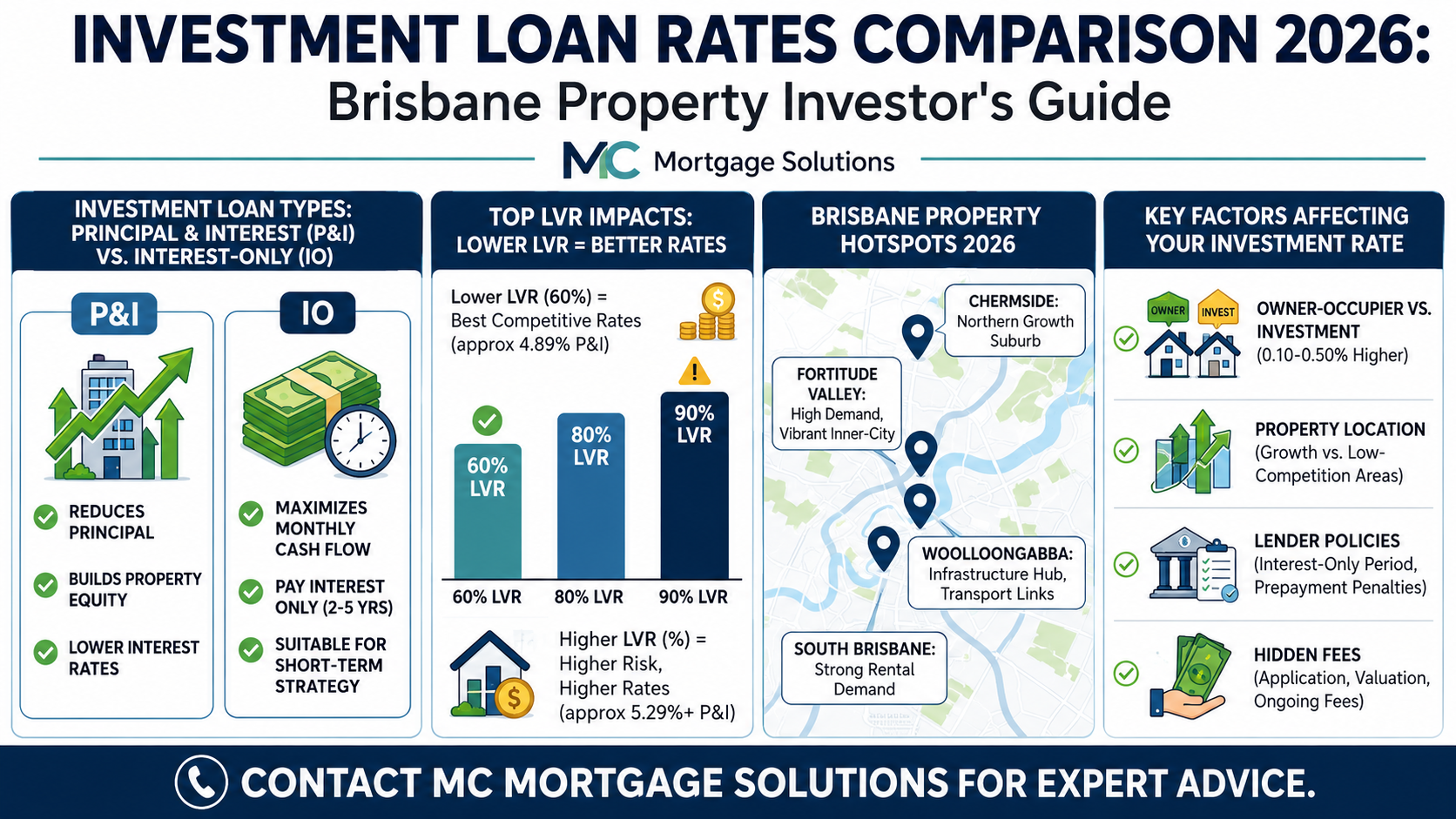
- Principal and Interest (P&I) Loans: These loans require both principal and interest to be paid, which reduces the loan balance over time.
- Interest-Only Loans: These loans only require you to pay the interest for a certain period (usually up to 5 years), making them a popular option for investors looking to minimize their monthly repayments.
Current Investment Loan Rates in Australia (2026)
Interest rates on investment loans can vary significantly depending on the lender, loan type, and loan amount. Let’s take a look at some of the best investment loan rates in Australia for 2026:
| Lender | Loan Type | Interest Rate | Comparison (Best Rates) |
| Lender A | P&I Standard | 5.19% | Competitive rate |
| Lender B | Interest-Only | 5.49% | Higher rate for IO loans |
| Lender C | P&I Low LVR | 4.89% | For LVR 60% loans |
| Lender D | Interest-Only | 5.69% | Good for long-term investors |
| Lender E | P&I High LVR | 5.29% | For LVR 90% loans |
These rates represent a snapshot of the current offerings from various lenders, and can change based on your individual circumstances and the lender’s policies.
Investment Loan vs. Owner-Occupier Rate Differential
One of the first things property investors should be aware of is the rate difference between investment loans and owner-occupier home loans . In general, investment loan rates are higher than owner-occupier loan rates because of the higher perceived risk involved in lending for investment purposes.
Here’s a simple breakdown of the differences:
- Investment Loan Rates: Higher rates due to the risk associated with the property not being used as a primary residence.
- Owner-Occupier Loan Rates: Lower rates as the borrower lives in the property, making it less risky for lenders.
The rate differential can range from 0.1% to 0.5%, depending on the lender. For example, if the owner-occupier rate is 4.5%, an investment loan rate could be 4.8% to 5.0%.
This difference might seem small, but over the life of the loan, it can add up significantly, especially for higher loan amounts.
Impact of Property Location on Investment Loan Rates
The location of the property you plan to invest in can have a significant impact on the investment loan rates you are offered. Lenders consider the demand for properties in specific areas when assessing the level of risk.
Areas with strong capital growth potential and high rental demand, such as inner-city suburbs or popular growth regions, tend to attract more favorable loan conditions. If you’re considering property investment in Brisbane , suburbs like Fortitude Valley and Woolloongabba are bustling, high-demand locations where lenders might offer competitive rates for investors.
However, for less desirable locations with lower growth potential, you may find that lenders charge slightly higher rates to offset the perceived risk. In addition to location, consider factors like the property’s condition, proximity to essential services, and future infrastructure developments, as these can all influence both the loan rate and your long-term investment success.
How to Choose the Right Investment Loan for Your Property
When choosing an investment loan, it’s essential to align your loan type with your property investment goals. If you’re still in the research phase, our guide on buying an investment property is a great starting point.
Start by determining whether you’re after long-term capital growth or steady rental income. If you’re looking for short-term cash flow and lower repayments, an interest-only loan may be a better option. These loans offer the flexibility to pay only the interest for the initial years, helping you maximize cash flow during the investment’s early stages.
On the other hand, if you’re planning to hold the property for the long term and want to build equity, a principal and interest (P&I) loan might be more suitable. This type of loan ensures that you are reducing the principal, helping you grow your equity over time, which could be beneficial for future property purchases.
Regardless of which loan you choose, always consider your ability to make higher repayments should interest rates rise, and factor in your future investment plans.
Interest-Only vs. Principal & Interest (P&I) Investment Rates
When choosing an investment loan, you will typically have the option between an Interest-Only (IO) loan and a Principal & Interest (P&I) loan. Understanding positive and negative gearing alongside your loan type choice can significantly impact your overall investment strategy.
Interest-Only Loans:
- Pros: Lower monthly repayments, better for investors looking to minimize costs in the short term, and potential tax benefits.
- Cons: You don’t reduce the principal of the loan, meaning the total amount owed remains high.
Principal & Interest Loans:
- Pros: Gradually reduces the principal of the loan, resulting in equity growth over time.
- Cons: Higher monthly repayments compared to interest-only loans.
In 2026, interest-only investment loan rates tend to be slightly higher than P&I rates. For example, you might find interest-only rates around 5.49%, while P&I rates could be 5.19%.
Which one is right for you depends on your investment goals. If you plan to hold the property for long-term capital growth and prefer lower monthly repayments, an interest-only loan might suit you. However, if you want to reduce the loan balance faster, P&I could be the way to go.
LVR Impact on Investment Loan Rates
Your Loan-to-Value Ratio (LVR) is one of the key factors that determines the interest rate you’ll pay on an investment loan. The LVR is the percentage of the property value that you borrow.
Here’s how LVR affects loan rates:
- Lower LVR (e.g., 60% or 70%): The lower your LVR, the lower your interest rate tends to be. This is because lenders perceive loans with lower LVRs as less risky.
- Higher LVR (e.g., 80% or 90%): Higher LVR loans are considered riskier for lenders, so they typically come with higher interest rates.
For example, a 60% LVR might attract a rate of around 4.89%, while an 80% LVR could see a rate closer to 5.19%. 90% LVR loans typically attract the highest rates, such as 5.29% or more.
It’s important to keep in mind that a lower LVR not only reduces your interest rate but also means you’ll need a larger deposit (at least 30% for an 80% LVR loan).
Lender-Specific Investment Loan Policies
Each lender has different policies that can influence the rates they offer. These policies might include:
- Interest-Only Loan Period: Some lenders offer interest-only loans for longer periods (up to 5 years), while others may limit the interest-only period to 2 years.
- Prepayment Penalties: Some lenders impose penalties if you pay off your loan early, so be sure to check this before committing.
- Fixed vs. Variable Rates: Some lenders offer the option to fix your rate for a certain period, providing predictability in your repayments.
Always read the fine print when choosing an investment loan, as these policies can impact your total loan costs over time.
Brisbane Investment Hotspots and Rate Examples
If you’re considering property investment in Brisbane in 2026, it’s important to know which areas are seeing growth. Some Brisbane hotspots for property investors include:
- Fortitude Valley: A vibrant, inner-city location with a mix of residential and commercial properties.
- South Brisbane: A popular location with strong rental demand and capital growth potential.
- Chermside: A growing northern suburb with excellent infrastructure and increasing demand.
- Woolloongabba: A suburb with great transport links and a hub for redevelopment.
Let’s take a look at how these areas could impact your investment loan rates:
- Fortitude Valley: Due to high demand, properties here may have a higher LVR (80-90%), leading to slightly higher rates around 5.29% to 5.49%.
- Chermside: As an up-and-coming area, expect investment loan rates of around 5.19%, especially for properties with an LVR of 70%.
Hidden Fees to Watch Out For
When comparing investment loan rates, it’s crucial to consider hidden fees that might not be included in the advertised rates. If at any point you’re considering switching lenders, understanding how refinancing works can help you weigh the true cost of moving your loan. Common hidden fees include:
- Application Fees: Some lenders charge a fee for processing your loan application.
- Valuation Fees: A valuation is often required to assess the property’s value, and this can cost anywhere from $200 to $500.
- Exit Fees: If you decide to refinance or pay off your loan early, some lenders may charge an exit fee.
- Ongoing Fees: These can include account-keeping fees or fees for making additional repayments.
Always ask lenders for a full list of fees to ensure you understand the total cost of your loan.
FAQs
Investment loan rates in Australia for 2026 range from around 4.89% to 5.69%, depending on the lender, loan type, and LVR. Rates vary based on factors such as the property location and whether the loan is interest-only or principal and interest.
Investment loan rates are typically higher than owner-occupier loan rates due to the higher perceived risk of lending for investment purposes. The difference can range from 0.1% to 0.5%, depending on the lender.
Interest-only loans offer lower initial repayments but don’t reduce the principal, while P&I loans require both principal and interest repayments, helping you pay off the loan balance over time.
A lower Loan-to-Value Ratio (LVR), such as 60%, can lead to lower investment loan rates, while higher LVRs (e.g., 80% or 90%) generally attract higher rates due to increased lender risk.
Yes, many lenders charge hidden fees such as application fees, valuation fees, and exit fees. It’s important to review all costs upfront to understand the total cost of your investment loan.
Finding the Best Investment Loan Rates in Australia for 2026
Securing the best investment loan rates is an essential part of any successful property investment strategy. Whether you choose a P&I loan or an interest-only loan, and whether you’re aiming for a low LVR or a high one, it’s important to compare the rates and policies of different lenders.
In 2026, Brisbane remains a hotspot for property investors, with areas like Fortitude Valley, Chermside, and Woolloongabba showing strong growth potential. By choosing the right investment loan and staying aware of potential fees, you can maximize your returns and make the most of your property investment journey.