
SMSF Commercial Property Loans: Buy Your Business Premises with Super (2026)
For many business owners, purchasing the premises where their business operates can be an exciting and profitable investment opportunity. One of the most powerful ways to do this is through a Self-Managed Super Fund (SMSF) commercial property loan. SMSFs allow you to use your superannuation savings to invest in commercial property, including the property your business occupies. By utilizing this strategy, business owners can not only secure a long-term business asset but also benefit from tax advantages.
However, as appealing as it sounds, navigating the rules and regulations around SMSF commercial property loans can be complex. In this article, we’ll break down the process, explain the key tax benefits, and explore what you need to know to successfully purchase your business premises using an SMSF commercial property loan.
What is an SMSF Commercial Property Loan?
An SMSF commercial property loan allows a self-managed super fund to borrow money to purchase commercial property. The key benefit of this strategy is that you can use your SMSF savings to purchase the property, potentially reducing the impact of your business’s tax liabilities while also making a solid long-term investment.
SMSF loans for commercial property work similarly to traditional commercial loans, but they are subject to strict regulations to ensure compliance with superannuation law. The loan must be structured carefully to meet the criteria set out by the Australian Taxation Office (ATO), and the property must be purchased under certain conditions that we’ll discuss in detail.
For a deeper dive into how this works specifically in the Queensland market, our SMSF Property Loans Brisbane Guide is a great starting point.
Key SMSF Commercial Property Investment Rules
Before considering an SMSF commercial property loan, it’s crucial to understand the rules that govern SMSF property investments. There are several important regulations to keep in mind:
Investment Purpose: The property must be used solely for investment purposes. In the case of business owners, this includes purchasing the commercial premises where their business operates. However, the SMSF cannot buy a residential property, and the commercial property must be used for business purposes.
Arm’s-Length Transaction: One of the most important requirements when purchasing a commercial property with an SMSF is that the transaction must be conducted at arm’s length. This means that the transaction must be fair and reasonable and carried out as if you were dealing with an unrelated third party. Essentially, you cannot give yourself a special deal or use related parties in the transaction.
Limited Recourse Borrowing Arrangement (LRBA): If the SMSF needs to borrow money to purchase the property, the loan must be structured as a limited recourse borrowing arrangement. This means that the lender’s recourse in case of default is limited to the property itself. In other words, the lender cannot pursue other SMSF assets in case of a loan default, providing a level of protection to the SMSF members.
No Personal Use: The property purchased by the SMSF cannot be used for personal purposes. In other words, you cannot buy a commercial property and then use it as a vacation home or for personal benefit.
Business Renting from Your Own SMSF: Rent Payments to Super
One of the main benefits of purchasing your business premises using an SMSF is that your business can rent the property from your SMSF. The rent payments made to your SMSF are paid directly into the super fund and can be reinvested. This can be a significant advantage, as it essentially turns your rent payments into contributions to your superannuation balance.
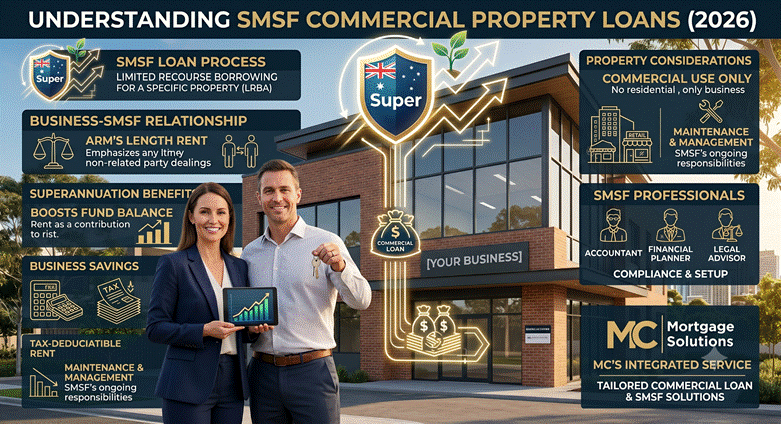
The key to this arrangement is ensuring that the rental agreement is structured correctly and complies with ATO guidelines. The rent charged must be at market rates, and the lease must be formalized with a legal agreement. This is another example of the arm’s-length requirement in action. Rent payments from your business to the SMSF are also tax-deductible, which can reduce your business’s overall tax burden.
For the SMSF, receiving rent payments from its own business premises is a source of income that can be reinvested. This income can help grow the balance of your superannuation fund, benefiting you in the long term.
Tax Benefits & Super Contribution Strategies
There are several key tax benefits to purchasing commercial property through an SMSF. Below are some of the most important:
Tax Deductibility: The interest on the loan used to purchase the property is typically tax-deductible, which reduces the taxable income of the SMSF. Furthermore, the rent payments made to the SMSF by the business are tax-deductible as well, reducing the business’s tax liability.
Capital Gains Tax (CGT) Concessions: If the property is sold in the future, any capital gains may be taxed at a lower rate within the SMSF compared to personal ownership. CGT discounts may apply to long-term holdings, especially when the SMSF is in the pension phase. Understanding positive and negative gearing is also essential here, as gearing strategies can further influence your overall tax position.
Superannuation Contributions: Rent payments made to the SMSF can be considered contributions, potentially allowing you to make additional contributions to your super fund and increase your retirement savings.
Asset Protection: SMSF commercial property investments provide some level of asset protection. If your business faces financial difficulties, the SMSF property is generally protected from business creditors, offering a buffer to your retirement funds.
These tax benefits make SMSF commercial property loans an attractive option for business owners looking to grow both their business and superannuation savings.
Lenders Offering SMSF Commercial Loans
While SMSF commercial property loans can be a great way to secure your business premises and build your retirement savings, lenders offering SMSF loans are limited. Unlike traditional commercial loans, SMSF loans require a more specific structure, and not all lenders are willing to offer them.
Banks and specialized lenders that provide SMSF commercial property loans will assess the SMSF’s financial position, the value of the property, and the business’s ability to repay the loan. Due to the nature of the loan, the lender may require a larger deposit compared to traditional business loans. Most lenders will require that the loan-to-value ratio (LVR) be below 70–80%.
In addition to financial criteria, lenders will look for clear evidence that the loan will comply with SMSF regulations. This often means involving SMSF professionals — such as accountants, financial planners, and legal advisors — to help structure the loan and ensure it complies with all rules. Working with a mortgage broker who accesses better rates across multiple lenders can be particularly valuable here, as they can identify which lenders are most SMSF-friendly and negotiate on your behalf.
Setup Costs & Compliance
Setting up an SMSF to purchase commercial property involves some upfront costs. These costs can include:
Establishment of the SMSF: Setting up an SMSF typically requires professional help, which can range from $1,000 to $3,000 depending on the complexity.
Ongoing Compliance Costs: An SMSF must comply with strict regulatory and reporting requirements. Annual audits, tax returns, and financial statements are necessary, and this can cost anywhere from $1,500 to $5,000 per year, depending on the complexity of the fund. Having dedicated accounting support is strongly recommended to stay on top of these obligations and avoid costly penalties.
Property Setup and Legal Fees: Legal fees related to drafting contracts, leases, and loan agreements can also add to the initial costs.
These costs must be carefully considered when purchasing property through an SMSF, as they can affect the overall financial viability of the investment. Our 10 tips for choosing an investment property can also help you evaluate whether a specific commercial property is the right fit before committing.
MC’s SMSF + Commercial Loan Combined Service
At MC Mortgage Solutions, we offer a unique combined service that integrates both SMSF management and commercial loan solutions. Our expert team of SMSF specialists can help you navigate the complexities of SMSF property investment, ensuring compliance with ATO regulations while providing you with a tailored commercial loan solution.
By combining both services, we can simplify the process of purchasing your business premises with your superannuation fund. Our team will ensure that everything — from loan structuring to property compliance — is handled seamlessly, allowing you to focus on your business growth and future retirement security.
Faqs
An LRBA is a type of loan structure used in SMSF commercial property purchases where the lender’s recourse is limited to the property itself in case of default. This helps protect other assets in the SMSF.
No, SMSFs are restricted to purchasing property within Australia. Foreign investment rules apply, and SMSF funds cannot be used for overseas property investments.
Non-compliance with ATO regulations, such as the arm’s-length rule or using the property for personal purposes, can lead to penalties, disqualification of the SMSF, or loss of tax advantages. It’s crucial to consult with SMSF professionals for compliance.
Setting up an SMSF for property purchase involves creating the super fund, transferring funds into the SMSF, setting up a Limited Recourse Borrowing Arrangement (LRBA), and complying with legal and financial requirements for property acquisition.
No, under the arm’s-length rule, the rent must be set at market rates. Charging below-market rent would breach SMSF regulations and result in penalties.
Yes, you can borrow money through an SMSF commercial loan, but it must be structured as a Limited Recourse Borrowing Arrangement (LRBA) to comply with SMSF regulations and protect the fund’s assets.
Typically, lenders require a deposit of 30% or more for SMSF commercial property loans, though the exact requirement may vary depending on the lender and the property.
The rental income paid to your SMSF by your business boosts the fund’s overall balance, increasing your retirement savings. The income is generally reinvested, allowing the super fund to grow tax-deferred.
If the property is sold within the SMSF, capital gains tax (CGT) applies. However, CGT is lower in SMSFs during the pension phase, where the fund is tax-free. Holding the property for a long period may also qualify for CGT discounts.
Yes, your SMSF can pay for property maintenance, management fees, and other costs associated with the commercial property. These expenses must be for the property’s upkeep and management, and all transactions must be documented and in compliance with SMSF regulations.
Conclusion
Purchasing your business premises with an SMSF commercial property loan can be a great way to secure your business’s future while also boosting your retirement savings. By understanding the rules, tax benefits, and compliance requirements, you can make an informed decision that benefits both your business and your superannuation fund.
With limited recourse borrowing arrangements and the opportunity to rent the property back to your business, an SMSF commercial property loan offers numerous advantages, especially for long-term wealth creation.
If you’re interested in purchasing commercial property using your SMSF, MC Mortgage Solutions is here to help. Contact us today for expert advice and a tailored solution to get your SMSF commercial property investment underway.