
Refinance Home Loan Brisbane: 2026 Guide | MC Mortgage Solutions
Refinancing your home loans in Brisbane is a powerful way to cut costs and improve your financial situation. With the Reserve Bank of Australia’s February 2025 rate cuts and ongoing competition among lenders, there’s never been a better time to explore your refinancing options.
This guide covers the top signs you should refinance, how to navigate over 30 Brisbane lenders, and what to expect in terms of refinancing costs. Whether you’re coming off a fixed-rate loan or seeking a better deal, this article will provide all the essential insights you need for 2026.
1. Five Signs You Should Refinance Your Home Loan Now in Brisbane
Home refinancing isn’t a one-size-fits-all solution, but it can be an excellent option under the right circumstances. Here are five clear signs that it’s time to refinance your home loan in Brisbane:
- Your Fixed Rate is Expiring Soon:
Many homeowners in Brisbane are facing the “fixed-rate cliff.” If your fixed-rate home loan is coming to an end, you’ll likely be moved to your lender’s standard variable rate, which could be significantly higher. Refinancing before your fixed rate expires can help you lock in a better deal. - Interest Rates Have Dropped:
After the RBA’s February 2025 rate cuts, many lenders have reduced their interest rates. If you’re still paying a higher rate, refinancing could save you hundreds of dollars every month, especially with current lower rates for both fixed and variable loans. - You Want Better Loan Terms:
If your current loan’s features, such as high fees or poor customer service, no longer suit your needs, refinancing can give you a fresh start with better loan terms and features, like offset accounts or redraw facilities. - Your Home’s Value Has Increased:
A rise in your property’s value could lower your loan-to-value ratio (LVR), meaning you might qualify for a better interest rate or eliminate mortgage insurance. Refinancing lets you take advantage of this increase in equity. - You’re Looking to Consolidate Debt:
Refinancing can be a way to consolidate higher-interest debts (like credit cards) into a more manageable mortgage with lower interest rates. This can streamline your finances and potentially save on interest payments.
2. Brisbane-Based Lender Comparison: 30+ Lenders You Can Access Through MC Mortgage Solutions
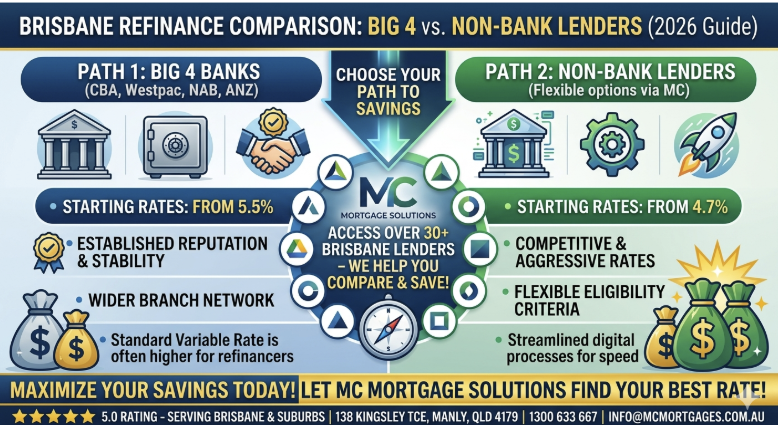
When home refinancing in Brisbane, you have access to a wide variety of lenders, including the Big 4 banks and non-bank lenders, which MC Mortgage Solutions works with. Here’s a breakdown of what you need to know when comparing lenders:
- Big 4 Banks (Commonwealth Bank, Westpac, NAB, ANZ):
The Big 4 banks offer security, stability, and a well-established reputation. However, their interest rates are often higher, especially for refinances. If you prefer working with large, familiar institutions and value their customer service, these banks could be a good choice. - Non-Bank Lenders:
Non-bank lenders (including many smaller, local lenders) are offering increasingly competitive interest rates and may have more flexible eligibility criteria. They tend to provide better deals for homeowners with unique needs, such as a higher loan-to-value ratio or non-standard credit profiles. - Key Benefits of MC Mortgage Solutions:
MC Mortgage Solutions partners with over 30 lenders, giving you access to some of the best rates in the market. Their services allow you to compare rates from multiple lenders and choose the best refinance deal for your unique situation. - Interest Rate Comparison:
With non-bank lenders offering rates starting as low as 4.7%, compared to the 5.5% starting rate for the Big 4 banks, refinancing through MC Mortgage Solutions could lead to significant savings.
3. Fixed Rate Cliff: When Fixed Rates Expire and How to Navigate It
Many homeowners in Brisbane are facing a situation called the “fixed-rate cliff”, where their low fixed-rate loan term is about to end, and they will be moved to a much higher variable rate.
What is the Fixed-Rate Cliff?
The “fixed-rate cliff” refers to the end of your fixed-rate period, after which you will automatically transition to your lender’s standard variable rate. This often leads to a sharp increase in your monthly repayments.
When to Refinance to Avoid the Cliff
If your fixed-rate period is coming to an end, it’s crucial to refinance before your loan switches to a higher variable rate. The best time to refinance is 3–6 months before the end of your fixed-rate term, giving you time to compare rates and secure a better deal.
Fixed-Rate Cliff Calendar (2026):
For many Brisbane homeowners, 2026 is shaping up to be a year where the fixed-rate cliff will hit hard. Make sure you’re prepared well in advance to prevent any unpleasant surprises when your loan switches to a higher rate.
4. Refinancing Cost Calculator: Break Costs and Savings Analysis
When deciding whether to refinance, it’s important to consider the costs involved, such as break costs, exit fees, and new loan establishment fees. While these costs can add up, the savings over the life of your loan may outweigh the initial expenses.
Break Costs:
If you’re breaking a fixed-rate loan early, break costs can be high. These costs depend on the market’s interest rates and how long you’ve had your fixed loan. However, with current lower interest rates, refinancing could still result in long-term savings despite these initial costs.
Refinancing Cost Calculator:
To determine if refinancing is worth it, use a refinancing cost calculator. This tool can help you compare your current loan with a new one, taking into account the fees, interest savings, and loan terms. It’s an essential tool to determine if refinancing is financially beneficial for you.
5. Rate Comparison: Big 4 vs. Non-Bank Lenders in Brisbane
When comparing Big 4 banks with non-bank lenders, the differences in rates and features can significantly impact your refinancing decision.
- Big 4 Banks:
The Big 4 banks are well-known for offering reliable customer service and consistent loan products. However, they often have higher interest rates, especially for refinancers. For example, the Big 4 may offer rates starting from 5.5% for refinancers. - Non-Bank Lenders:
Non-bank lenders, on the other hand, are more aggressive with rates and can offer starting rates as low as 4.7%, depending on the borrower’s situation. These lenders may also offer better flexibility in terms of loan terms and features, making them an attractive option for homeowners seeking to refinance. - Interest Rate Differences:
By refinancing with a non-bank lender, you could secure a better interest rate, potentially saving hundreds or thousands of dollars over the life of your loan. - Why Non-Bank Lenders Are Gaining Popularity:
Non-bank lenders are increasingly popular due to their lower rates, more flexible terms, and fast approval processes. They are particularly beneficial for those with less-than-perfect credit or unique refinancing needs.
FAQs
Refinancing a home loan in Brisbane means replacing your current mortgage with a new one, typically to secure a lower interest rate, reduce monthly payments, or access home equity. Many homeowners refinance when they’re coming off a fixed-rate home loan or when interest rates drop, like after the RBA’s recent rate cuts.
You should consider refinancing if your fixed rate is expiring, interest rates have dropped, or if your financial situation has improved. It’s also a good option if you’re looking for better loan features, such as an offset account or redraw facility. A refinance calculator can help you estimate potential savings.
The best refinance rates in Australia can vary based on your lender and financial situation. Currently, non-bank lenders offer more competitive rates starting from 4.7%, compared to the Big 4 banks, which offer rates around 5.5%. Rates also depend on factors like your Loan-to-Value Ratio (LVR) and whether you’re refinancing after a fixed-rate loan.
MC Mortgage Solutions gives you access to over 30 Brisbane lenders, including both the Big 4 banks and non-bank lenders. It’s important to compare interest rates, loan terms, and additional features to find the best deal. Make sure to use a refinance calculator to analyse potential costs and savings before making a decision.
Refinancing involves certain costs like break fees, especially if you’re ending a fixed-rate loan early, exit fees, and new loan establishment fees. However, the savings from a lower interest rate and reduced monthly repayments often outweigh these initial costs. Use a refinance calculator to help determine whether refinancing is worth it for you.
Conclusion
Refinancing your home loan in Brisbane offers significant savings opportunities, especially with the recent rate cuts from the RBA. By understanding when to refinance, comparing lenders, and using tools like a refinance calculator, you can make the most of the current market.
Whether you’re coming off a fixed-rate loan or looking to switch to a better deal, taking action now could lead to significant long-term savings. Don’t wait until your fixed-rate period ends; explore your refinancing options today to lock in a better rate and start saving.