
LVR Calculator Australia: How to Calculate Loan-to-Value Ratio (2026 Guide + Free Tool)
Understanding the Loan-to-Value Ratio (LVR) is crucial when applying for a home loan in Australia. The LVR helps lenders determine the risk involved in a loan. Higher LVRs often result in higher interest rates or the need for Lenders Mortgage Insurance (LMI).
In this guide, we’ll break down how to calculate LVR using our interactive LVR calculator. We’ll also explain the LVR’s impact on your interest rate, deposit calculations, and the difference between investment property and primary place of residence (PPOR) requirements. Read on for a simple and comprehensive guide.
What is LVR?
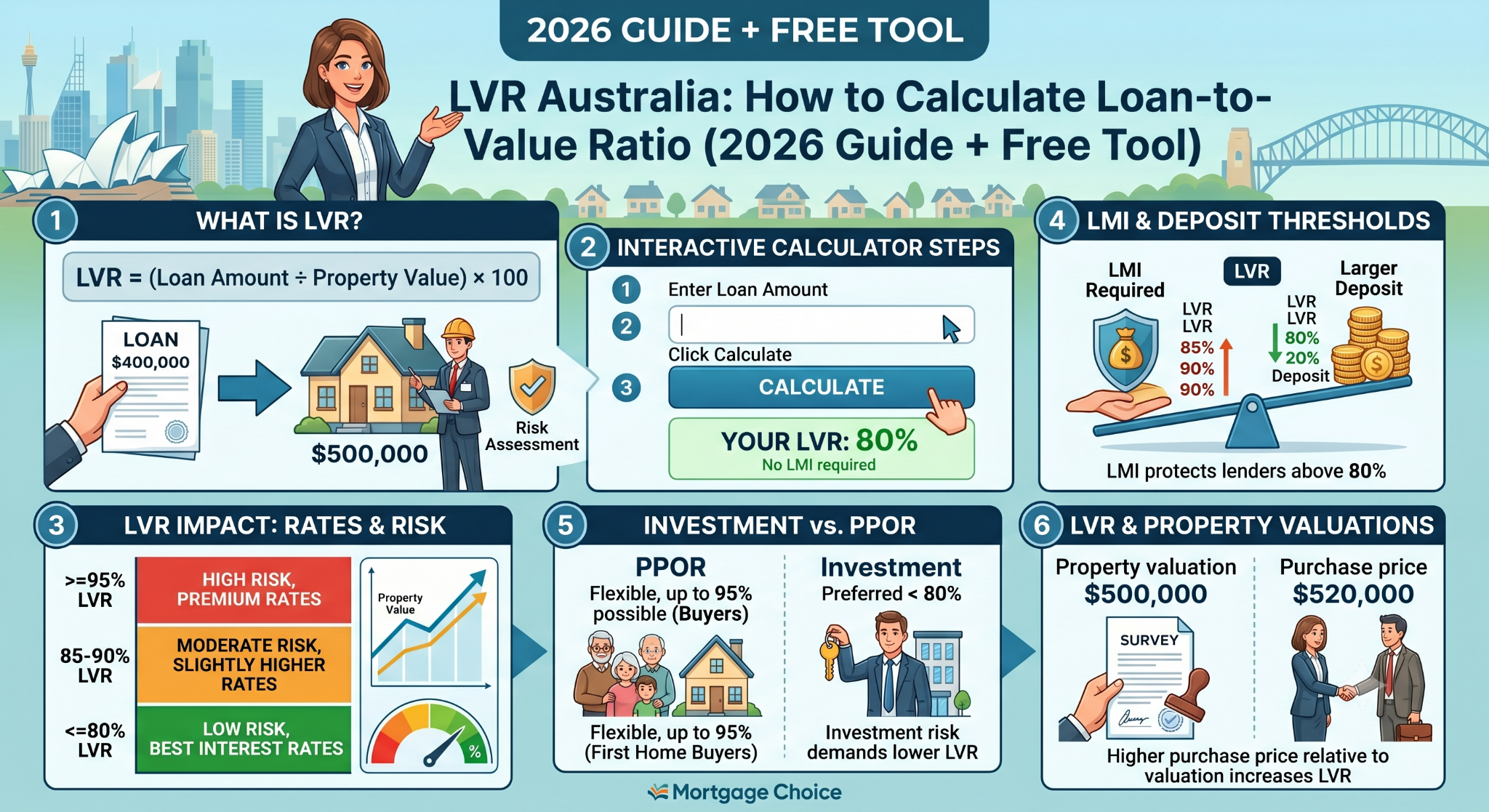
The Loan-to-Value Ratio (LVR) is a percentage that compares the loan amount you are borrowing to the appraised value of the property. It is used by lenders to assess the risk of lending. A higher LVR indicates a higher loan compared to the property value, which may result in higher risks for lenders. Typically, LVR is calculated as:
LVR = (Loan Amount ÷ Property Value) × 100
For example, if you’re borrowing $400,000 to purchase a property valued at $500,000, your LVR would be 80%.
Understanding LVR is essential for homeowners and investors as it can influence the interest rate, insurance requirements, and the amount of deposit needed.
Interactive LVR Calculator: How to Use it?
An LVR calculator simplifies the process of determining your Loan-to-Value Ratio. It allows you to input your loan amount and property value to calculate the ratio in seconds. To use the LVR calculator, simply follow these steps:
- Enter your loan amount.
- Enter the property value or appraised value.
- Click calculate.
The calculator will instantly provide your LVR percentage.
This tool can help you understand how your LVR affects loan conditions, especially when determining the amount of deposit you need or if you need to pay Lenders Mortgage Insurance (LMI). Using a free LVR calculator can save you from confusion when navigating your loan options.
How Does LVR Impact Interest Rates?
Your LVR can significantly affect the interest rate on your home loan. Lenders use LVR as one of the key factors to assess risk. The higher the LVR, the higher the perceived risk, which can result in higher interest rates.
For example:
- LVR of 80% or below: Low risk. May qualify for lower interest rates.
- LVR of 85%–90%: Moderate risk. You may pay slightly higher rates.
- LVR of 95% or more: High risk. Lenders often charge a premium.
A higher LVR means you are borrowing more relative to the property’s value. As a result, the lender is at a higher risk if property values drop. This can lead to higher interest rates and the requirement for LMI. There are also 5 reasons you may be able to get a lower interest rate by improving your financial profile before applying.
LMI Thresholds: What You Need to Know
Lenders Mortgage Insurance (LMI) is often required when your LVR is above a certain threshold. Here’s how it works:
- 80% LVR: Most lenders require LMI if your LVR is above 80%. LMI protects the lender in case you default on the loan.
- 85%–90% LVR: Some lenders may offer loans with an LMI premium, but you may pay a higher interest rate.
- 95% LVR: Typically, loans with LVRs above 90% require higher LMI premiums due to the higher risk.
To avoid LMI, most borrowers aim to keep their LVR below 80%. One effective strategy is a guarantor home loan, where a family member uses their property as security, helping you avoid paying LMI even with a smaller deposit. However, some lenders allow higher LVRs with special conditions, which may include a higher interest rate or added fees.
How to Calculate the Deposit from Your LVR
Your LVR also directly affects the size of the deposit you need for a property. To calculate your required deposit, subtract your LVR from 100%.
For example:
- If the property value is $500,000 and the LVR is 80%, your loan amount will be $400,000.
- This means your deposit needs to be $100,000 (20% of the property value).
For higher LVRs, you will need a larger deposit to make up the difference. For example, a 90% LVR means you’ll need a 10% deposit. If saving a full 20% feels out of reach, exploring low deposit home loans may be a practical alternative worth considering.
Understanding the relationship between deposit and LVR helps in planning your home purchase, ensuring you are financially prepared.
Property Valuation vs. Purchase Price
When calculating your LVR, the property value is crucial. However, there’s a difference between the property valuation and the purchase price.
- Property Valuation: The amount a professional appraiser determines your property is worth.
- Purchase Price: The actual amount you agree to pay for the property.
If the purchase price is higher than the property valuation, your LVR will be higher, increasing the amount of risk to the lender. A low LVR often results from a property being undervalued, but it can also lead to a lower purchase price.
This difference plays an essential role in calculating how much you will borrow and how much deposit you will need.
Investment vs. PPOR LVR Requirements
When applying for a home loan, there are different LVR requirements for investment properties and Primary Place of Residence (PPOR).
- PPOR LVR Requirements: For PPOR loans, lenders tend to be more flexible with LVRs. Some may allow up to 95% LVR for first-time homebuyers, but this will likely involve paying LMI.
- Investment Property LVR Requirements: For investment properties, most lenders prefer a lower LVR (80% or less) to reduce the risk. This is because the rental income from investment properties can be less stable than a home that’s being lived in.
If you’re considering buying an investment property, it’s worth reviewing our 10 tips for choosing an investment property to ensure you’re making the right financial decision. The LVR requirements for both types of properties can also vary based on the type of loan and lender policies.
Mortgage Choice’s Expertise in LVR Ranges
Mortgage Choice is a well-known name in the home loan industry in Australia. They specialize in a variety of LVR ranges, helping borrowers secure loans that match their needs.
- Low LVR (80% or below): Competitive rates, no LMI.
- Higher LVR (up to 95%): Available but with slightly higher interest rates and LMI fees.
Mortgage Choice’s lending experts can help you navigate the complexities of LVR calculations and offer insights into how to improve your LVR for a better loan outcome. Their experience across multiple LVR ranges makes them a great option for those unsure about their loan-to-value situation.
FAQs
The maximum Loan-to-Value Ratio (LVR) for home loans in Australia is typically 95%. However, loans with an LVR above 80% usually require Lenders Mortgage Insurance (LMI). Some lenders may offer special conditions for higher LVRs, but 90% LVR is often the maximum available without requiring LMI.
Yes, you can get a home loan with a high LVR, but it comes with additional costs and risks. When your LVR exceeds 80%, you will likely need to pay Lenders Mortgage Insurance (LMI). Lenders might also offer higher interest rates for loans with high LVRs (above 90%) due to the increased risk involved.
The LVR is calculated based on the property valuation and purchase price. If the purchase price is higher than the property valuation, it can increase your LVR, meaning you might need to pay a larger deposit or Lenders Mortgage Insurance (LMI).
Yes, LVR requirements differ for investment properties and Primary Place of Residence (PPOR). For PPOR loans, many lenders are more lenient with higher LVRs, allowing up to 95%. However, for investment properties, lenders generally prefer lower LVRs (around 80%) to minimize their risk
To lower your LVR, you can either increase your deposit or reduce your loan amount. The higher your deposit, the lower your LVR will be, which can help avoid paying Lenders Mortgage Insurance (LMI). Following 5 simple steps to increase your chances of getting a loan can also help you improve your overall financial position. You can also consider refinancing your home loan or paying down your loan faster.
Conclusion
The Loan-to-Value Ratio (LVR) is an essential factor when applying for a home loan in Australia. By understanding how LVR works and using an LVR calculator, you can make informed decisions about your loan. It helps you calculate your deposit, understand interest rate impacts, and avoid Lenders Mortgage Insurance (LMI).
Remember, the LVR can vary depending on whether you’re purchasing a primary residence or investment property. Mortgage Choice’s expertise can guide you through the process to find the best loan options for your needs.
For more insights and to calculate your LVR, use our interactive LVR calculator now!