
Best Income Protection Insurance Australia 2026: 7 Providers Compared (Brisbane Guide)
Income protection insurance is crucial for securing your financial future, especially if you’re unable to work due to illness or injury. Whether you’re managing mortgage repayments, daily living expenses, or planning for the long term, having the right borrowing protection in place can make all the difference. In Australia, various providers are offering different policies, making it essential to choose the right one. In this guide, we’ll compare the best income protection insurance providers in Australia for 2026.
We’ll take a closer look at the top 7 options, highlighting coverage levels, premium costs, and waiting periods, while considering factors like occupation-specific policies and tax deductibility. If you live in Brisbane, we’ll also factor in the cost of living to help you make an informed decision.
Top 7 Income Protection Providers in Australia (2026)
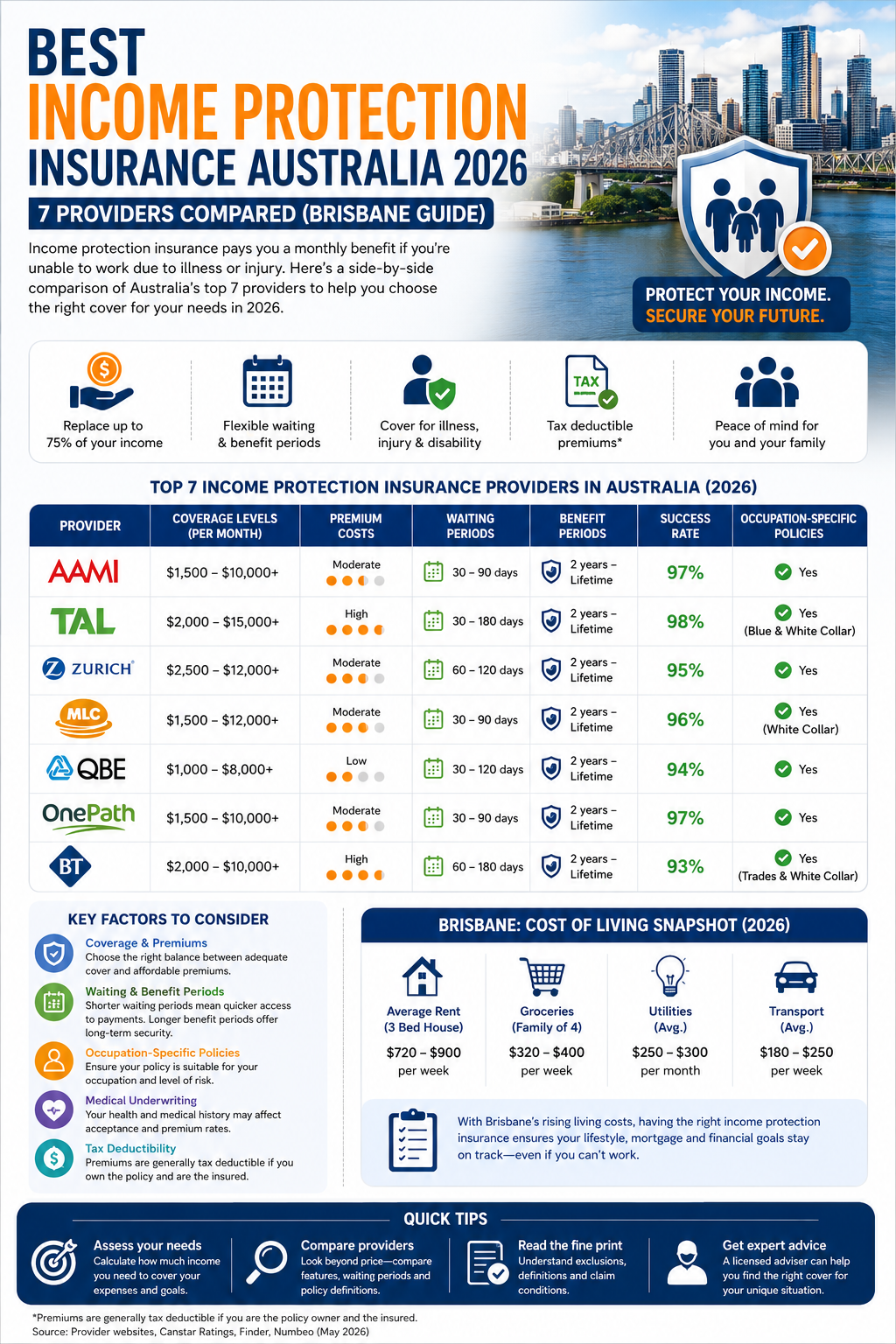
When shopping for income protection insurance, it’s essential to compare the offerings of different providers. Here, we’ve ranked the top 7 income protection insurance providers in Australia based on their coverage, benefits, premiums, and success rates.
| Provider | Coverage Levels | Premium Costs | Waiting Periods | Benefit Periods | Success Rate | Occupation-Specific Policies |
| AAMI | $1,500 to $10,000+ | Moderate | 30 days – 90 days | 2 years – Lifetime | 97% | Yes |
| TAL | $2,000 to $15,000+ | High | 30 days – 180 days | 2 years – Lifetime | 98% | Yes (Blue & White Collar) |
| Zurich | $2,500 to $12,000+ | Moderate | 60 days – 120 days | 2 years – Lifetime | 95% | Yes |
| MLC | $1,500 to $12,000+ | Moderate | 30 days – 90 days | 2 years – Lifetime | 96% | Yes (White Collar) |
| QBE | $1,000 to $8,000+ | Low | 30 days – 120 days | 2 years – Lifetime | 94% | Yes |
| OnePath | $1,500 to $10,000+ | Moderate | 30 days – 90 days | 2 years – Lifetime | 97% | Yes |
| BT | $2,000 to $10,000+ | High | 60 days – 180 days | 2 years – Lifetime | 93% | Yes (Trades & White Collar) |
1. Coverage Levels & Premium Costs
When it comes to income protection insurance, understanding the coverage levels and premium costs is crucial. Coverage typically ranges from $1,000 to $15,000 per month, but the actual amount you need will depend on your income and lifestyle. If you’ve recently noticed that your borrowing capacity has fallen, securing adequate income protection becomes even more important to safeguard your financial position.
AAMI offers coverage between $1,500 to $10,000 per month, with moderate premiums. It’s an excellent option for those seeking affordable rates without sacrificing reliability.
TAL and Zurich are on the higher end of the spectrum, offering coverage of $2,000 to $15,000 and $2,500 to $12,000, respectively. Their higher premiums are often justified by the higher coverage limits and extra benefits.
For those with a tighter budget, QBE offers lower premiums but with a $1,000 to $8,000 coverage range, making it a good choice for those looking for basic protection.
2. Waiting Periods & Benefit Periods Explained
The waiting period is the amount of time you must wait after becoming unable to work before receiving payments. The benefit period refers to how long you will receive payments once your claim is accepted.
Providers like AAMI, TAL, and MLC have relatively short waiting periods of 30 to 90 days, meaning you can access your payments sooner if you need them. Zurich and BT have longer waiting periods (60–180 days), which can help lower your premium but might not be ideal if you need quick financial support.
The benefit period usually ranges from 2 years to lifetime. If you are concerned about long-term disability, opting for lifetime coverage can provide peace of mind that you’ll be supported no matter how long you’re unable to work. During a period of income loss, it’s also worth reviewing your repayments — understanding how to manage repayments during financial hardship can help you stay on top of your obligations while your claim is being processed.
3. Occupation-Specific Policies: White Collar vs. Trades
One critical factor when choosing an income protection provider is whether the policy caters to your occupation. Income protection insurance varies depending on whether you’re in a white-collar job (e.g., office worker) or a blue-collar job (e.g., construction worker).
TAL and BT offer occupation-specific policies, which are important if you have a higher risk job. For instance, if you’re a tradesperson, you might face higher premiums, but the right policy can ensure you’re covered for specific job-related injuries.
MLC and AAMI primarily cater to white-collar workers, but they also offer general policies that may apply to a broader range of professions. When assessing your overall financial protection, it’s worth speaking with a professional about your general insurance options to ensure all aspects of your life and assets are adequately covered.
4. Medical Underwriting Requirements
Before you can get your income protection insurance, most providers require medical underwriting to assess your health. This process helps determine your premiums and whether you’ll be accepted for coverage.
Providers like MLC and TAL have lenient underwriting, meaning they may approve people with minor health issues.
On the other hand, Zurich and QBE tend to ask for more detailed medical information, especially for applicants over a certain age or those with pre-existing conditions.
It’s always advisable to disclose your health conditions fully to avoid potential issues later, especially when making a claim. If you’re unsure how your health or financial profile affects your overall borrowing and protection strategy, working with a mortgage broker can help you navigate these complexities with professional guidance.
5. Tax Deductibility of Premiums
A significant benefit of income protection insurance in Australia is that the premiums are tax-deductible. This means you can claim them on your tax return, potentially lowering your taxable income.
Most of the leading providers, like AAMI, Zurich, and TAL, offer tax-deductible premiums. To make the most of this benefit, ensure you keep records of all your premium payments throughout the year. This can lead to significant savings on your annual tax bill. Similarly, understanding positive and negative gearing pros and cons is another valuable strategy for Australians looking to reduce their taxable income through smart financial planning.
6. Claims Success Rates
When choosing an income protection insurance provider, you should also look at their claims success rate. A high success rate indicates that the provider is reliable when it comes to paying out claims.
TAL and AAMI have some of the best claims success rates, with both providers consistently achieving success rates over 97%. This means that they are more likely to approve your claim and provide the financial support you need.
BT and QBE have slightly lower success rates (around 93–94%), but they are still reliable options.
7. Brisbane Cost of Living Context (Coverage Amounts)
The cost of living in Brisbane can have a significant impact on how much coverage you need. Living expenses, including rent, utilities, and healthcare, should be factored in when selecting your income protection insurance.
Brisbane residents may need higher coverage amounts due to the city’s higher living costs. Providers like TAL and Zurich offer larger coverage options, making them ideal for individuals looking to cover their monthly living expenses, especially in high-cost areas. For those planning their long-term financial security, combining income protection with a solid investment strategy can provide a well-rounded safety net.
If you’re on a tighter budget but still need income protection, AAMI and QBE can offer lower premiums while still providing reasonable coverage. Additionally, Brisbane residents who are self-employed or managing their own retirement funds should also consider how income protection fits within their self-managed super fund strategy, particularly when planning for periods where they may not be able to contribute to their super due to illness or injury. For those looking to lower your financial obligations alongside securing income protection, reviewing your existing loan rates is a practical step toward stronger overall financial health.
FAQs
Income protection insurance covers your income if you’re unable to work due to illness or injury, while life insurance pays a lump sum to your beneficiaries if you pass away. Income protection focuses on temporary financial support, whereas life insurance is about providing financial security for dependents.
Waiting periods vary by provider and policy but typically range from 30 to 180 days. Providers like AAMI and MLC offer shorter waiting periods of 30 to 90 days, while Zurich and BT may have longer waiting periods in exchange for lower premiums.
Your occupation plays a significant role in determining your premiums. Tradespeople (e.g., construction workers, electricians) usually face higher premiums due to the increased risk of injury. Providers like TAL and BT offer occupation-specific policies, ensuring that blue-collar workers and white-collar professionals receive coverage that suits their job risks.
Yes, income protection insurance premiums are generally tax-deductible in Australia. This means you can claim the cost of your premiums as a deduction on your annual tax return, reducing your overall taxable income.
The benefit period of income protection insurance can range from 2 years to lifetime, depending on your policy. If you opt for lifetime coverage, you’ll be protected until you return to work, retire, or the insurance provider no longer offers the benefit.
Yes, most providers offer flexible options for coverage amounts. Typically, you can choose coverage that ranges from $1,500 to $15,000 per month, depending on your income and desired financial security. TAL and Zurich provide higher coverage limits for those needing more substantial protection.
Yes, older applicants may face higher premiums because the risk of illness or injury increases with age. Some providers, like TAL and Zurich, may charge higher premiums for individuals over 50 years old. It’s important to apply early to secure a more affordable premium.
If you need to make a claim, you’ll need to submit medical documentation and proof that you are unable to work due to illness or injury. Providers like AAMI and TAL have high claims success rates (97% or higher), making it more likely that your claim will be approved quickly. Always check with your provider for specific claims processes.
Yes, you can have both, but income protection insurance typically covers situations where workers’ compensation doesn’t. For example, if you’re injured outside of work or the injury is not covered by workers’ compensation, income protection insurance will kick in to provide financial support. MLC and OnePath offer comprehensive coverage that works alongside workers’ compensation.
Generally, income protection insurance does not cover pre-existing conditions unless specified in the policy. Providers like Zurich and QBE may have more stringent medical underwriting requirements that could impact coverage for those with existing health conditions. However, some insurers, like TAL, may offer more flexible options for applicants with minor pre-existing conditions. Always discuss your medical history with the insurer before purchasing the policy.
Conclusion
Choosing the best income protection insurance in Australia requires careful consideration of your needs, premium budget, and personal circumstances. The top providers, such as TAL, AAMI, and Zurich, offer a range of options that can be tailored to suit both high-income earners and those on a budget. For Brisbane residents, it’s essential to account for the cost of living when selecting your coverage level. Always consider waiting periods, benefit periods, and occupation-specific policies to ensure you’re choosing the most appropriate plan for your lifestyle.