
Commercial Property Loan Rates 2026: Brisbane Lender Comparison & Guide
When looking to secure a commercial property loan in Brisbane, business owners must navigate through varying loan rates, lender policies, and the specific needs of the commercial property market. Explore our commercial property loans page to see how MC Mortgage Solutions can help your business move forward.
With 2026 fast approaching, understanding the loan rates and how they apply to different property types can significantly impact your business’s financial future. In this guide, we’ll explore commercial vs. residential loan rates, how the loan-to-value ratio (LVR) affects your rates, the difference between fixed and variable rates, and more. We’ll also provide a lender comparison to help you choose the best option for your commercial property loan needs in Brisbane.
Commercial vs. Residential Loan Rates: What’s the Difference?
The most notable difference between commercial property loans and residential loans is the interest rates. In general, commercial property loan rates tend to be higher than residential loan rates due to the increased risks that lenders take on when financing business properties. Residential loans are more predictable because they’re tied to the borrower’s personal property, while commercial loans involve more volatile business assets.
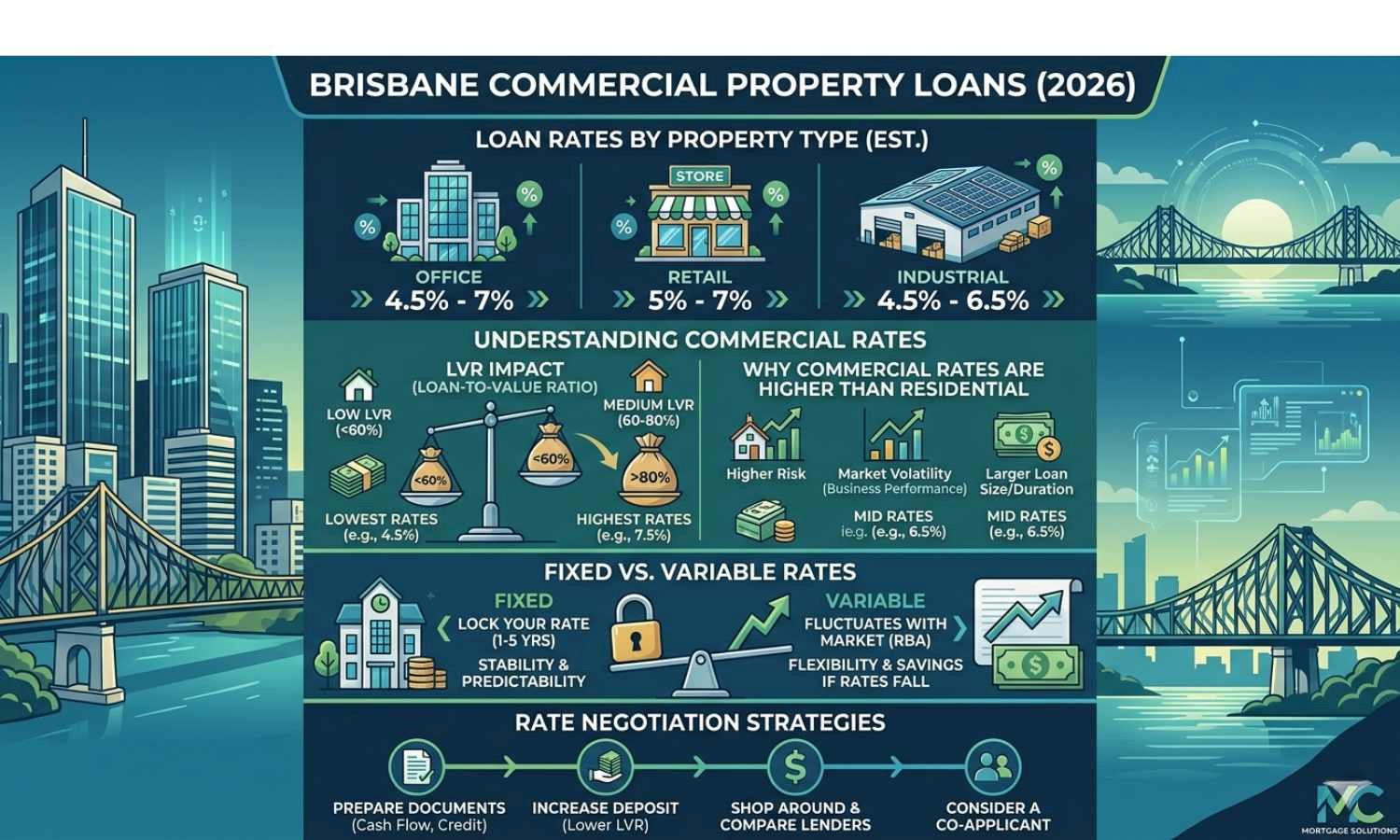
Commercial loan rates in Australia typically range between 4.5% to 7%, depending on factors like the LVR, property type, and the lender’s risk appetite. By contrast, residential rates in Australia can range from 2.5% to 5%, depending on your credit history, loan term, and property type.
Why Are Commercial Loan Rates Higher?
Lenders usually see commercial properties as higher-risk investments than residential properties. Several factors contribute to these higher rates:
- Property Type: Office, retail, and industrial properties have different risks and yield potential, which affect how lenders price their loans.
- Loan Size and Duration: Commercial loans tend to be larger and longer-term, which can increase the risk for lenders.
- Business Performance: The ability of the business operating in the property to generate revenue can directly affect the loan terms and rates.
While commercial loan rates are higher than residential rates, understanding the different types of commercial properties and how rates are set based on property types will help you make more informed decisions.
Rate Ranges by Property Type
When considering commercial property loans, the type of property you’re purchasing will play a critical role in determining the interest rate. Here’s a breakdown of the rate ranges based on property types:
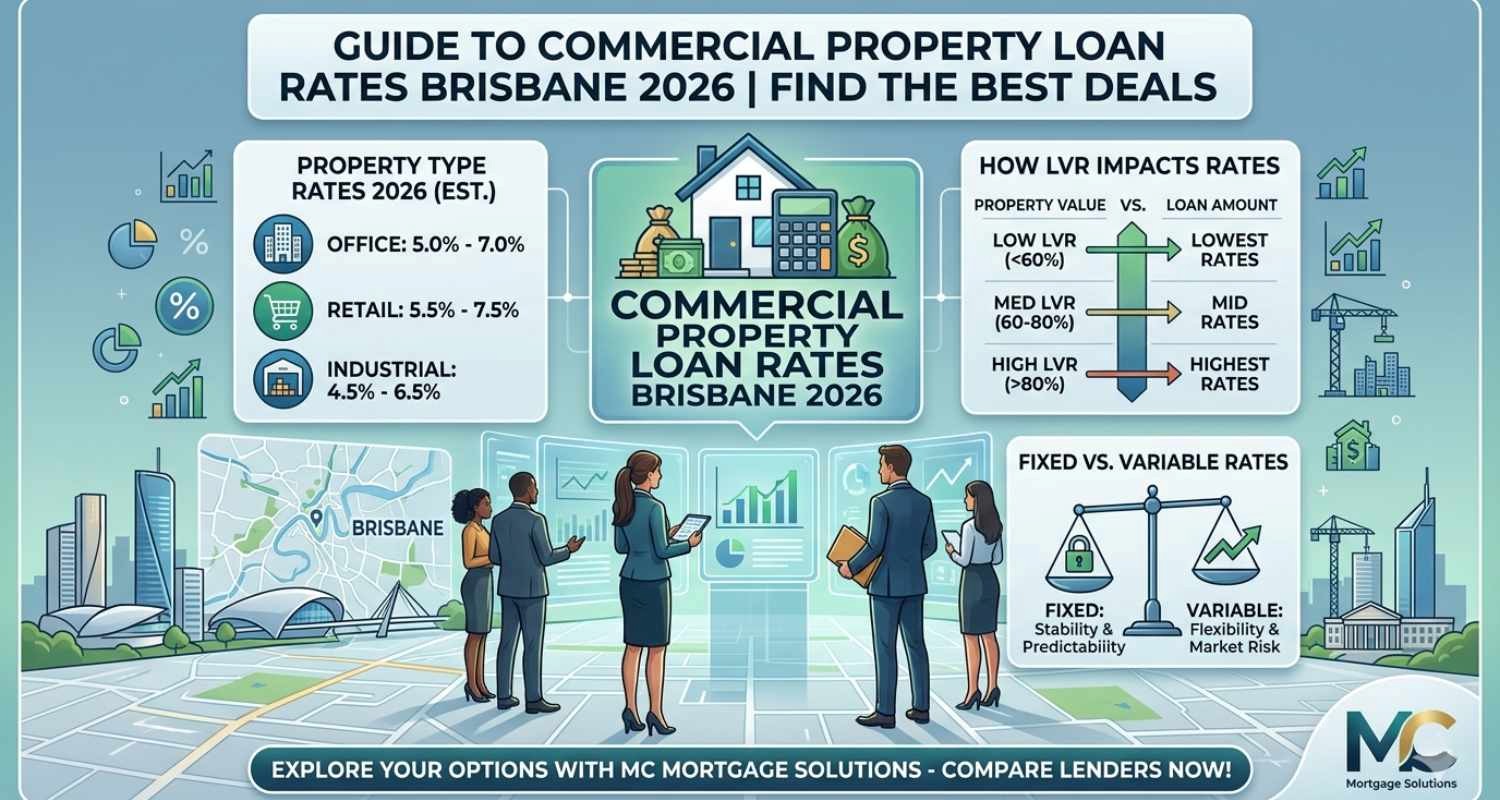
- Office Properties: Typically, loans for office properties have an interest rate between 5% and 7%. This is because office spaces are generally seen as stable but can be subject to economic cycles, such as vacancy rates and business growth.
- Retail Properties: Retail properties tend to attract a similar rate range, with interest rates ranging from 5.5% to 7.5%. The rate depends on factors like foot traffic, location, and the performance of tenants.
- Industrial Properties: Industrial properties, including warehouses and manufacturing spaces, generally come with rates between 4.5% and 6.5%. Industrial properties are seen as less risky due to the long-term lease agreements common in this sector, often with larger corporations.
How Does LVR Impact Commercial Loan Rates?
The Loan-to-Value Ratio (LVR) plays a crucial role in determining your commercial loan rate. The LVR is the amount of money you’re borrowing relative to the value of the property. A higher LVR represents a higher risk for the lender, and as a result, the interest rates are often higher. Learn more about how this works in our detailed guide — what is loan-to-value ratio (LVR)?
- Low LVR (below 60%): If you’re borrowing less than 60% of the property’s value, you’re considered a low-risk borrower. Lenders will often offer more competitive rates, sometimes as low as 4.5%.
- Medium LVR (60%–80%): For LVRs between 60% and 80%, you can expect rates to range from 5% to 6.5%. While you’re still considered a relatively safe borrower, there is more risk than a low LVR loan.
- High LVR (above 80%): When borrowing more than 80% of the property value, lenders may charge a higher interest rate to offset the increased risk. You may see rates starting at 6% to 7.5%.
Fixed vs. Variable Commercial Rates: What’s the Best Option?
When securing a commercial property loan, you’ll need to decide between a fixed rate or a variable rate. Both options have their pros and cons, and understanding these will help you choose the best option for your situation. Read our guide on variable vs fixed rate loans to understand which option suits your financial situation best.
Fixed-Rate Loans
A fixed-rate loan locks in your interest rate for the entire loan term. This offers stability and predictability, especially if you’re worried about interest rate hikes. Fixed rates typically range from 4.5% to 6.5%, depending on the lender and loan term.
Pros:
- Stability and predictability of monthly repayments.
- Protection against rate increases in a volatile market.
Cons:
- Less flexibility if interest rates drop.
- Potentially higher than variable rates if rates decrease over time.
Variable-Rate Loans
A variable-rate loan means your interest rate will fluctuate with market conditions. If the Reserve Bank of Australia (RBA) lowers interest rates, your repayments will decrease. However, if rates rise, your monthly repayments will increase.
Pros:
- Potential for lower rates if interest rates decrease.
- Flexibility to pay off the loan early without penalties.
Cons:
- Uncertainty, as interest rates can fluctuate.
- Higher risk if rates increase unexpectedly.
Brisbane Commercial Property Market Context
The Brisbane commercial property market has experienced strong growth in recent years, making it an attractive location for business owners looking to invest in commercial property. With a booming economy and increasing demand for industrial, office, and retail spaces, the city has seen strong capital growth and rental yields. Read our guide on is now the right time to refinance — Brisbane’s 2026 market outlook to stay ahead of the curve.
However, like any market, Brisbane’s commercial property market is not without its risks. Changes in interest rates, economic conditions, and tenant demand can impact the long-term profitability of your investment. Understanding these factors, along with the lender rates, will help you navigate the market effectively.
Lender-by-Lender Rate Comparison
When shopping for a commercial property loan in Brisbane, it’s crucial to compare different lenders to find the best rate for your needs. Read our guide on national vs local mortgage lenders to understand the key differences before you decide. Here is a comparison of Brisbane lenders and their rates for 2026:
| Lender | Loan Type | Interest Rate | LVR | Features |
| MC Mortgage Solutions | Commercial Property | 4.9% – 6.5% | Up to 80% | Flexible terms, quick approval |
| Commonwealth Bank | Office, Industrial | 5.2% – 7.0% | Up to 75% | Fixed and variable rates |
| Westpac | Retail, Office | 5.5% – 7.2% | Up to 80% | Offers high LVR options |
| ANZ | Industrial, Retail | 5.0% – 6.8% | Up to 80% | Low deposit options |
| Bendigo Bank | Office, Industrial | 5.3% – 7.5% | Up to 85% | Competitive variable rates |
Rate Negotiation Strategies for Commercial Loans
When securing a commercial property loan, negotiating the best rate is essential. Discover 5 reasons you may be able to get a lower interest rate and how to use them to your advantage when speaking to lenders. Here are some strategies you can use:
- Offer a Larger Deposit: If you can increase your deposit, you’ll lower your LVR and reduce the lender’s risk, which may result in a better rate.
- Shop Around: Different lenders will offer different rates, so it’s important to compare multiple options.
- Leverage Your Relationship: If you have an existing relationship with a lender, use it to negotiate better terms or lower rates.
- Consider a Co-Applicant: Adding a co-borrower with a stronger financial profile can increase your chances of securing a better rate.
- Ask for Discounts: Some lenders offer rate discounts for businesses with strong credit or financial stability. Don’t hesitate to ask.
MC’s Commercial Lending Panel Access
At MC Mortgages, we offer access to a wide range of lenders through our commercial lending panel, giving you the opportunity to choose from competitive commercial property loan rates. Find out do mortgage brokers get better rates? and how our panel access gives you a competitive edge. Our team of experts will work with you to understand your business’s needs and help you secure the most favourable loan terms.
FAQs
The average interest rate for a commercial property loan in Brisbane ranges from 4.5% to 7% in 2026, depending on factors like loan type, LVR, and loan term.
Yes, lenders in Brisbane may offer better rates for loans with low LVRs (below 60%). A low LVR reduces the lender’s risk and could result in lower interest rates.
Different property types — such as office, retail, and industrial properties — affect loan rates. Office properties tend to have higher rates than industrial properties due to market volatility.
The LVR limits for commercial property loans typically range from 60% to 85%. Banks may offer higher LVRs for industrial properties, while retail and office properties may have stricter limits.
Most fixed-rate commercial property loans in Brisbane have terms ranging from 1 to 5 years. The fixed rate guarantees that your monthly repayments stay the same for the duration of the term.
A fixed-rate loan offers stability and protection against interest rate hikes but lacks flexibility. A variable-rate loan, on the other hand, can fluctuate but may offer lower initial rates and the potential for savings if rates fall.
Yes, negotiating loan rates is possible, especially if you have a good credit history, a larger deposit, or a strong relationship with the lender. Don’t hesitate to ask for discounts or better terms.
Business cash flow and credit history are crucial for securing a commercial property loan. A strong cash flow demonstrates your ability to repay, while a solid credit history can help you qualify for lower interest rates.
To apply for a commercial property loan, research lenders offering competitive rates, compare loan terms, and gather documents such as financial statements, business plans, and property details. Then, submit your application.
Currently, there are no specific government schemes for commercial property loans in Australia, but certain tax incentives or grants for specific sectors (e.g., green building initiatives) may apply. Check with your lender or a commercial broker for available options.
Conclusion
Navigating the commercial property loan market in Brisbane can be complex, but understanding the key factors that affect loan rates can make the process much easier. By comparing rates, considering the impact of LVR, and deciding between fixed and variable rates, you’ll be better positioned to make the right choice for your business. Don’t forget to shop around and negotiate for the best rates, and if you need help, contact MC Mortgage Solutions today — our experts are here to assist you every step of the way.