

 QLD Broker of the Year
Investment Property Refinancing Brisbane, QLD
We check rental serviceability, cross-collateralisation risk and DTI limits before you switch lenders, comparing 30+ lenders at no cost to you.

About MC Mortgage Solutions: Investment Refinance Specialists in Greater Brisbane
MC Mortgage Solutions is based in Manly, QLD, and has been providing investment property refinancing services across Greater Brisbane since 2007. We help property investors refinance loans across the region, from the inner suburbs through to the Redlands and beyond.
We handle investment property refinancing: moving an existing investment loan to a sharper structure, releasing equity for your next purchase, or separating a portfolio a lender has cross-collateralised without you fully realising.
We start every refinance with a structure review, not a rate chase, checking how your properties are currently secured and what a move will genuinely cost before you commit. Investment lending has its own rules, and we work to them, not a generic owner-occupier checklist. We work with investors across Greater Brisbane, including Manly, Wynnum, Wynnum West, Lota, Birkdale, Wellington Point, Carina and Morningside.














Who We Serve: Investment Property Refinancing Across Brisbane QLD
Investment refinancing carries its own rules, and the reason behind the move changes what actually works. We work with Brisbane property investors across a range of portfolio situations.
Investors Locked in Cross-Collateralised Loans
One property used to secure another sounds convenient until you want to sell, refinance, or access equity on just one of them. We work out what it takes to separate your securities into stand-alone loans without triggering costs you have not budgeted for.
Investors Coming Off Interest-Only
When an interest-only period ends, repayments jump because you start paying down the loan itself, not just the interest. We look at your options well before that switch happens, not after the higher repayment arrives.
Investors Releasing Equity to Buy Again
Growing a portfolio usually means using equity in what you already own as the deposit for what comes next. We work out how much is genuinely available and what a new loan against it will cost to service, alongside our investment loans options for the purchase itself.
Accidental Landlords
Your old home became a rental instead of being sold, and the loan behind it was never restructured for investment purposes. We review whether your current loan still makes sense now that the property’s purpose has changed.
Self-Employed Investors
Fluctuating business income reads differently to lenders once you are servicing multiple properties, not just one. We know which lenders assess self-employed investment portfolios fairly and which will not look past a single lower-income year.
Investors Spread Across Multiple Lenders
Loans opened at different times with different banks rarely add up to the best overall structure. We review your full portfolio and work out whether consolidating, or simply repricing, gets you further ahead.

The Cross-Collateralisation Trap Most Brisbane Investors Don’t Know They’re In
If your bank used equity in one property to help you buy another, there is a good chance those properties are now cross-collateralised, held as combined security under one loan structure with one lender.
It feels convenient at the time. It becomes a problem later. Sell one property and the bank can require the proceeds to reduce the combined debt before releasing security. Refinance to a better rate elsewhere and you have to untangle the entire structure first, with new valuations on every linked property at $300 to $600 each, and potential break costs if any portion is fixed.
Most investors are better served by an 80/20 structure instead, releasing equity from an existing property as its own standalone loan, then using it as a deposit with a separate lender for the next purchase. Same outcome, no cash deposit, no LMI, but each property’s loan stays independent.
How Lenders Actually Assess Your Rental Income
Rental income does not count in full. Most lenders only accept 70% to 80% of your gross rental income toward serviceability, with the rest treated as a buffer against vacancy and costs.
On top of that, every lender must test your repayments at roughly 3 percentage points above your actual rate, an APRA-mandated buffer that applies to investment loans exactly as it does to owner-occupier ones. Between the rental shading and the buffer, two investors with identical portfolios can be assessed very differently depending on which lender does the sums.

The Interest-Only Cliff: What Happens When Your IO Period Ends
Interest-only periods on investment loans are typically capped at 5 years per block before a lender requires you to reapply, and some non-bank lenders extend this to 10 years. Interest-only pricing also carries a premium, typically 0.20% to 0.50% above the equivalent principal and interest rate.
The bigger issue is what happens at the end of the term. Repayments can jump 30% to 50% once the loan converts to principal and interest, because you are suddenly paying down the balance as well as the interest. On a $600,000 loan, that is the difference between roughly $3,250 and $4,300 a month. We review your IO expiry date before it arrives, not after the higher repayment has already hit your account.
The 2026 Debt-to-Income Rules and What They Mean for Your Portfolio
Since 1 February 2026, APRA has capped how much of each bank’s new lending can go to borrowers with a debt-to-income ratio above 6 times gross income, limited to 20% of their new quarterly lending. It is a lender-wide speed limit, not an automatic decline for any one borrower, but it means banks are more selective once a portfolio pushes past that ratio.
Interest-only loans make this harder to manage, since the loan balance is not reducing during the IO period, your DTI ratio does not naturally improve the way it does under principal and interest. Non-bank lenders are not bound by this particular APRA rule, which is one reason we compare investment refinance options across more than just the major banks.
Interest Deductibility: Why Loan Purpose Still Matters
Refinancing an investment property can affect what portion of your interest is tax deductible, particularly if any of the new borrowing is used for a non-investment purpose. Mixing investment and personal debt in the same facility can complicate that deductibility significantly.
This is not tax advice, and we always recommend confirming deductibility with your accountant, but we structure the loan itself to keep investment and personal borrowing separate wherever possible, so that conversation with your accountant is straightforward rather than a mess to unpick.
Reviews That Reflect Our Service and Results


Our Real Client Testimonials on YouTube
What to Expect Once You Start
Portfolio Review
We map every property, loan, and security arrangement you currently hold, including whether any of it is cross-collateralised.
Lender and Structure Comparison
We compare rate, policy and DTI treatment across 30+ lenders, and recommend whether to refinance, restructure, or both.
Settlement and Separation
We manage the application, any security substitution needed to separate cross-collateralised properties, and the settlement timing.
Why Choose MC Mortgage Solutions for Your Investment Refinance
25+ Years of Experience
Combined lending experience reading investment loan structures most brokers miss.
Cross-Collateralisation Checked First
We check for cross-collateralisation first, and untangle it before comparing lenders, not after.
Real Investment Serviceability
We assess your serviceability the way an investment lender actually calculates it, factoring in rental income shading properly, not with a generic owner-occupier calculator.
IO Expiry Tracked
We track your interest-only expiry date so the jump to principal and interest never catches you off guard.
Free To You
Our service costs you nothing upfront. The lender pays our commission once your refinance settles.
Deductibility Protected
We structure new borrowing to keep investment and personal debt separate, protecting your interest deductibility.
Ongoing Portfolio Reviews
We stay engaged after settlement, reviewing your portfolio’s structure again whenever your circumstances or the lending landscape change.
Speak to a Brisbane Investment Refinance Specialist
Book a free, no-obligation portfolio review, and we will tell you honestly whether your current structure is holding your portfolio back.
Investment Property Refinancing Across Brisbane, QLD and Redlands
We refinance investment property portfolios right across Brisbane, with the deepest knowledge in the bayside and Redlands, where rental demand and capital growth have made equity release a common next step for local investors.
We regularly refinance investors in Manly, Manly West, Wynnum, Wynnum West, Lota, Wakerley, Tingalpa, Birkdale, Wellington Point, Ormiston, Victoria Point, Redland Bay and surrounding Brisbane suburbs. Mobile and online appointments are available if you cannot get to the Manly office.
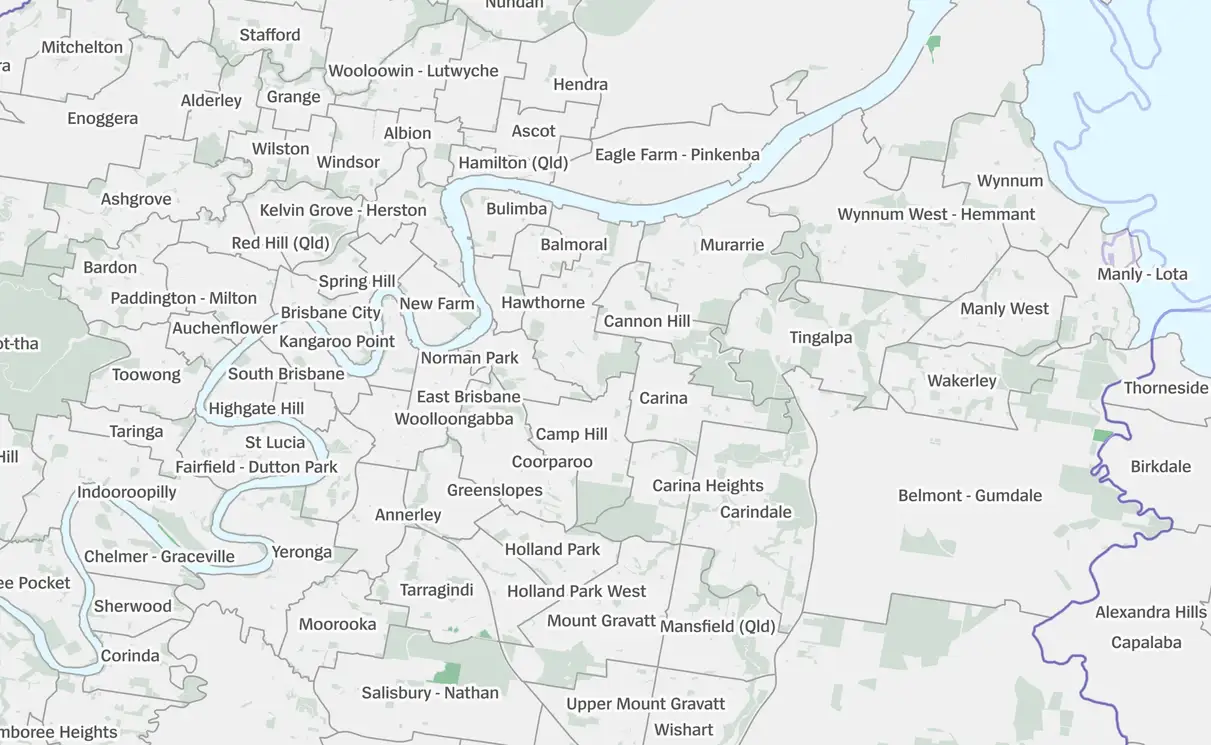
Service Areas We Serve Across Greater Brisbane & Bayside
From our Manly office we meet clients across the Bayside, the Redlands Coast and Brisbane’s east. Choose your suburb for local lending guidance.
Looking for the Best Mortgage Broker Near Me in Brisbane? Get Trusted Guidance.
- Mobile appointments across Brisbane and Bayside
- Free Mortgage and personalised loan guidance
- Trusted by 90 % referral clients
Manly & Wynnum
Redlands Coast
Map: Gompk, CC BY-SA 4.0, via Wikimedia Commons (cropped)
Qualified, Licensed & Local
| Category | Details |
|---|---|
| Licensing | MC Mortgage Solutions Pty Ltd · ACN 128 555 902 · Australian Credit Licence 394061. Matthew Carr, Credit Representative. |
| Experience | Locally owned and operating on Brisbane’s bayside since 2007. Brokers with 25+ years of lending experience each. |
| Best-interests duty | As a mortgage broker, we are bound by law to act in your best interests, a duty that applies to every broker in Australia. |
Our Lenders
We compare more than 200 loan products from 30+ banks and specialist lenders, including:

































Find Out If Your Portfolio Is Structured to Grow
Not just whether you can get a better rate, whether your current structure is quietly limiting what you can buy next. MC Mortgage Solutions compares 30+ Brisbane lenders and reviews your entire portfolio structure, not just the loan you called about, at no cost to you.
Our All Services
Investment refinancing is one part of what we do. Explore the rest of our Brisbane lending and financial services.
Financial Services
Income protection, investment, general insurance, accounting and self-managed super.
Explore financial servicesRefinance
Review your current loan against the market and switch when the numbers stack up.
Explore refinancingFrequently Asked Questions (FAQs)
Common questions about cross-collateralisation, rental income shading, interest-only expiry, DTI rules and interest deductibility. If yours is not here, ask us directly.
How do I know if my investment properties are cross-collateralised?
Check your loan documents for whether more than one property is listed as security against a single loan or facility. If you are unsure, we can review your mortgage documents and tell you within one conversation.
How much of my rental income counts when I refinance?
Most lenders count 70% to 80% of gross rental income toward serviceability, with the remainder held back as a buffer against vacancy and costs. This varies by lender, which is one reason a single bank’s answer is not the final word.
What happens when my interest-only period ends?
Your repayments typically jump 30% to 50% as the loan converts to principal and interest. On a $600,000 loan, that can mean moving from roughly $3,250 to $4,300 a month, so we review your expiry date well before it arrives.
Do the new debt-to-income rules mean I cannot borrow more?
Not automatically. Since 1 February 2026, banks are limited in how much of their new lending can go to borrowers above a 6 times income DTI ratio, but it is a lender-wide cap, not a blanket refusal, and non-bank lenders are not bound by it.
Will refinancing affect the tax deductibility of my investment loan interest?
It can, particularly if any new borrowing is used for a non-investment purpose. We structure refinancing to keep investment and personal debt separate, though you should confirm deductibility specifics with your accountant.
Should I refinance all my properties with one lender or spread them out?
Spreading them across separate, non-cross-collateralised loans usually preserves more flexibility to sell, refinance, or borrow again independently, which is why we generally recommend against consolidating a whole portfolio with one bank.
How much does it cost to refinance an investment property?
Similar to an owner-occupier refinance, generally $500 to $2,000 in total fees, though untangling a cross-collateralised structure can add valuation costs of $300 to $600 per linked property.
Can I release equity from an investment property to buy another one?
Yes, this is one of the most common reasons investors refinance, and structuring that equity release as a standalone loan rather than a cross-collateralised one keeps your next purchase independent of your existing properties.
Visit or Call Our Manly Office
MC Mortgage Solutions is based on Kingsley Terrace in Manly and meets clients across Greater Brisbane and the Bayside, in person or online.
| Monday to Friday | 8 am to 5 pm |
| Saturday | 9 am to 5 pm |
| Sunday | 9 am to 5 pm |
Australian Credit Licence 394061 | ACN 128 555 902